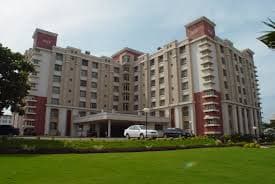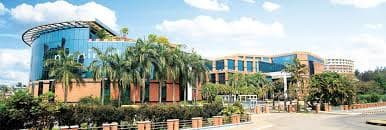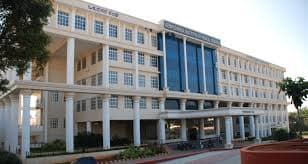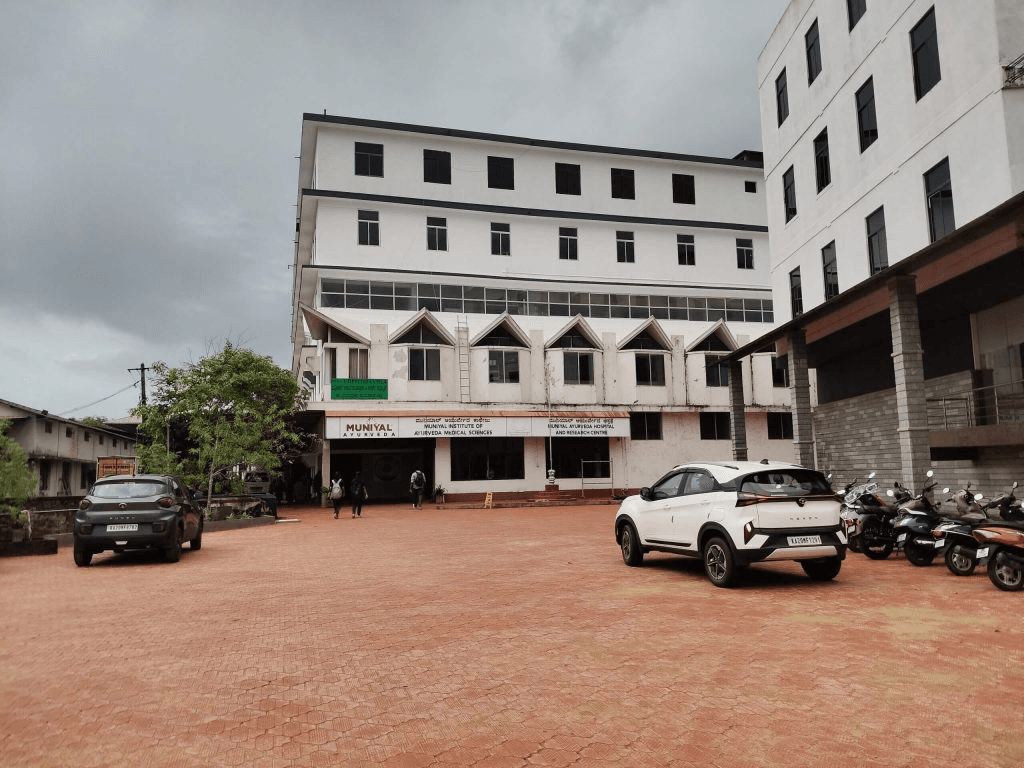
The Muniyal Institute of Ayurveda Medical Science, Manipal is a known institution that really tries to push Ayurvedic education, research, and healthcare services in Karnataka. It is run by the Dr. U. Krishna Muniyal Memorial Trust, and it was started with this clear idea of sharing authentic Ayurvedic knowledge, but also tying it with modern scientific approaches for health care education. It draws from the legacy of Late Dr. U. Krishna Muniyal , who was a respected Ayurvedic practitioner, and he had more than four decades of experience , so the place kind of grew over time into a proper hub for Ayurvedic learning and real clinical practice. The college is affiliated with Rajiv Gandhi University of Health Sciences (RGUHS), Bengaluru , and it is approved by the Ministry of AYUSH , plus the National Commission for Indian System of Medicine (NCISM).
So the institute basically offers undergrad, postgrad, and doctoral programs in Ayurveda, and it’s kind of built around a balanced mix of learning the theory, doing practical training, plus education that’s research‑oriented. In other words, students aren’t only stuck with books, they get clinical exposure via the attached Muniyal Ayurveda Hospital & Research Institute. That place is a specialty Ayurvedic teaching hospital, and it has quite extensive facilities for patient care, including Panchakarma therapies, diagnostics, and holistic treatment methods, you know. The institution seems to really stress patient‑centered healthcare, and it pushes students to grow solid clinical and professional skills through hands-on experience, even when it gets a bit demanding.
The campus offers pretty modern academic infrastructure, classrooms, labs, and even a computerized library plus digital learning resources, and also medicinal herbal gardens, along with research facilities. On the side of study, the institute also supports community service activities, health awareness programs and participation in sports, plus general extracurricular development that feels kinda continuous. With its focus on traditional Ayurvedic principles, at the same time for scientific progress, and for healthcare excellence, Muniyal Institute of Ayurveda Medical Science keeps contributing in a big way to Ayurvedic education and holistic healthcare across India.
Muniyal Institute of Ayurveda Medical Science Highlights:
Let's examine the key information of Muniyal Ayurvedic College Manipal:
Particulars | Details |
College name | Muniyal Institute of Ayurveda Medical Sciences |
Popular name | MIAMS Manipal |
Establishment | 1940 |
Institute type | Private |
Location | Shivally Industrial Area, Manipal Bangalore |
Campus size | 56 acres |
Ranking | Good |
Affiliated with | Rajiv Gandhi University of Health Sciences, Bangalore |
Approved by | Central Council of Indian Medicines |
Courses offered |
|
UG entrance exam | NEET UG exam conducted by NTA |
PG entrance exam | All India Ayush Post Graduate Entrance Examination, AIAPGET |
Gender | Co-ed |
Student count | 444 |
Faculty count | 56 |
Intake capacity | 100 |
Hostel facilities | Yes (Male & Female) |
Official website | |
Category | BAMS Colleges in Karnataka |
2. Muniyal Institute of Ayurveda Medical Science Course Details and Fee Structure:
1) BAMS
Seat intake: 100
Duration: 4.6 years plus a year of internship
Fee structure:
All India quota fees - 2,50,000/-
State quota fees - 75,000/-
Management quota fees - 4,00,000/-
NRI quota fees - 6,00,000/- .
2) MD/MS (Ayurveda)
Specialisations | Duration | Fee structure | Seat intake |
M.D. Dravyaguna | 3 years | 11.03 Lakhs | 5 |
M.D. Kayachikitsa | 3 years | 11.03 Lakhs | 5 |
M.D. Panchakarma | 3 years | 11.03 Lakhs | 5 |
M.S. Shalya Tantra | 3 years | 11.03 Lakhs | 5 |
M.D. Rasashastra and Bhaishajya Kalpana | 3 years | 11.03 Lakhs | 9 |
3. Eligibility, Admission Process, and Documents Required:
Eligibility-
1) BAMS
The aspirants must have completed the 10+2 intermediate exams or equivalent in the respective core subjects such as: Physics, Chemistry, Biology and English language with 50% aggregate.
And the reserved category aspirant ST/SC/OBC aspirants must have scored 40% aggregate in the PCB and English language.
The aspirants must be 17 years old or must have crossed 17 before the 31st December for the admission process.
2) MD/MS (Ayurveda)
Students are required to have a BAMS degree from any institute that is recognized by the Central Council of Indian Medicine, New Delhi.
Also, completion of a one-year internship is mandatory by or before 31st March for getting into the MD/MS course.
Etc. & other requisites if any.
Admission Process-
1) BAMS
Pass the NEET entrance exam which is conducted by the National Testing Agency (NTA).
Then apply via the counselling method, based on whatever is done by your state or the central counselling authorities.
While submitting the application, pick Muniyal Institute of Ayurveda Medical Sciences as your preferred institute.
In case a seat is allotted to you, report to the institute for document verification and the other admission formalities.
2) MD/MS (Ayurveda)
Qualify the NEET PG exam, and then proceed.
Apply for the counselling process as it is notified by the respective authorities.
For the counselling round, choose Muniyal Institute of Ayurveda Medical Sciences and pick the specialisation you need.
In case you get selected, apply at the institute level too.
Documents Required-
All candidates who receive an allotment for a seat at this college will be required to report for the completion of their admission formalities by providing the following documents as mentioned below:
1) BAMS
Class 10 certificate and mark sheet (for date of birth)
Class 12 certificate and mark sheet
Admit card
Scorecard or rank letter
Provisional allotment letter
ID proof (Aadhar/PAN card/Driving license/Passport)
Eight passport-size photographs
Caste certificate (if applicable)
PwD certificate (if applicable)
Fee receipt.
2) MD/MS (Ayurveda)
10th standard certificate as proof of birth
AIAPGET admit card
AIAPGET scorecard
BAMS first, second, and third year exam score sheets
The institution's head will award a certificate of Internship completion
Ayush provides the qualifying examination certificate, which is the permanent or provisional BAMS degree certificate
Valid government identity proofs (Aadhar card/PAN card/Voter ID/Driving license, or Passport)
SC/ST/OBC certificate (if required)
Physically handicap medical certificate (if required).
5. Strengths/Challenges:
Strengths-
The Muniyal Institute of Ayurveda Medical Science, it’s kind of a long established Ayurveda place with a long legacy in Ayurvedic education, healthcare and research, and it works under the Dr. U. Krishna Muniyal Memorial Trust.
It is affiliated to Rajiv Gandhi University of Health Sciences (RGUHS) and also approved by the Ministry of AYUSH and the National Commission for Indian System of Medicine (NCISM), so the academic standards are basically recognized without fuss.
Students get a lot of clinical practice thanks to the attached Muniyal Ayurveda Hospital & Research Institute, it has roughly 160–175 beds, and it gives exposure to many Ayurvedic specialties, along with Panchakarma therapies, and that matters a lot.
Here, you’ll find undergraduate, postgraduate, and doctoral programs, so students can go further with higher studies and focus on specialization within Ayurveda.
Ayurvedic research is taken seriously too. Dedicated research centers, patented products, medicinal plant conservation efforts, plus pharmaceutical manufacturing facilities, all of that supports the whole research side.
On the campus, the setup includes laboratories, a computerized library, herbal gardens, pharmacy training units, and digital learning resources, which helps in both learning and practical work, not just theory.
Also there’s community involvement through NSS activities, rural health programs, medical camps, and public health awareness initiatives, so students gain that real-world exposure beyond the classroom walls.
And the location in Manipal, which is a well known educational hub, gives students access to a strong academic environment and a healthcare ecosystem that’s pretty supportive.
Challenges-
So basically as Ayurveda education keeps moving ahead, the institute might end up needing to keep reshaping its physical setup, technology integration and research capacity, to match the shifting expectations from both education and healthcare sides.
And then there is also the part about widening interdisciplinary cooperation with modern medical sciences, plus teaming up with international research organizations, because that could honestly open more academic as well as research opportunities for students.
Still, keeping things balanced between time honored Ayurvedic principles and evidence based scientific investigation is kind of a constant problem, for lots of Ayurveda institutions especially for the ones trying to innovate and modernize in a serious way.
Also there is this growing competition among Ayurveda colleges all over India, so the institute may need to keep pushing for academic quality, stronger research output, and better institutional visibility, otherwise it gets harder.
Looking forward, expanding advanced research facilities, specialty treatment centers, and global academic linkages could matter quite a lot for future institutional growth.
And when student intake goes up along with more healthcare responsibilities, they may need to invest more in faculty development, better clinical training resources, and extra student support services, so the education stays solid and the practical exposure doesn’t get reduced.
6. Conclusion:
The Muniyal Institute of Ayurveda Medical Science, Manipal seems like a respected place for Ayurvedic learning, health care, and research, it kinda works on multiple sides. Because of its long history, clear academic links, and faculty with solid experience, students get a lot of exposure. Also, the clinical training opportunities are strong, so learners don’t just stay in books. The whole study atmosphere is based on traditional Ayurvedic principles, yet it’s supported by more modern educational practices, you know, in a balanced way.
There’s also a dedicated teaching hospital, plus research facilities and some community outreach steps, all of which makes the practical part easier to understand. As the institution keeps adapting to changing educational plus healthcare needs, it stays focused on generating skilled Ayurveda professionals who can really make a difference for holistic healthcare, and society too. Even while everything is shifting a bit, the commitment stays there, to produce the right kind of trained practitioners.