1.Introduction:
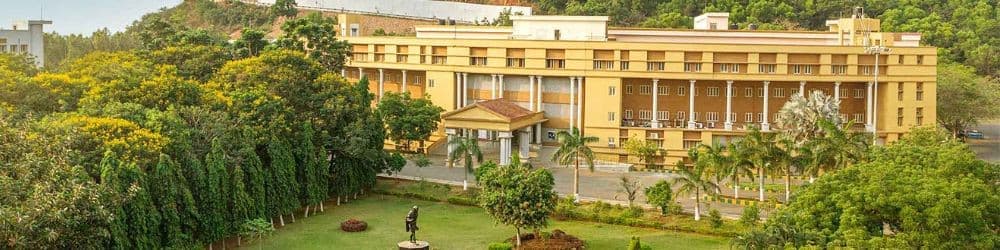
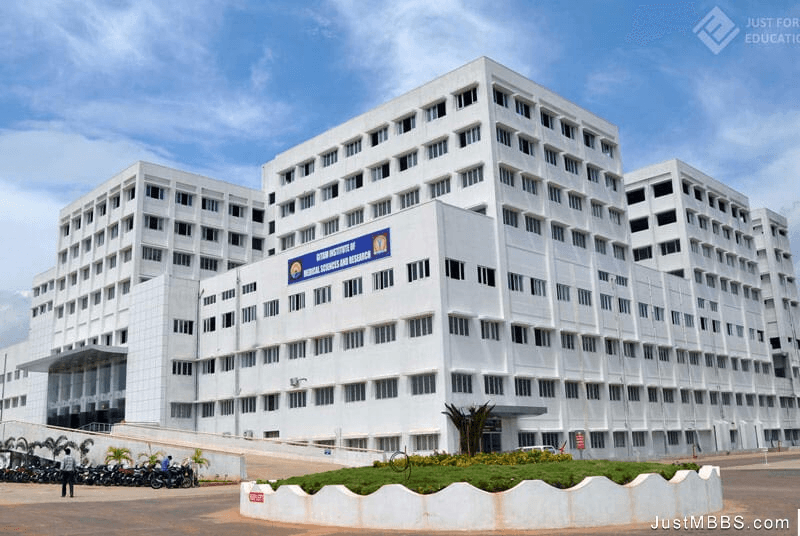
GITAM Institute of Medical Sciences and Research, popularly known as GIMSR, and was established in 2015 with the vision of delivering quality medical education, advanced healthcare services, and research-oriented clinical training in Andhra Pradesh. Located at the university’s Rushikonda campus in Visakhapatnam. The institute has rapidly developed into a modern centre for Undergraduate and Postgraduate medical education with a strong emphasis on competency-based learning and professional ethics. The college is recognized by the National Medical Commission (NMC) and offers MBBS Course along with MD/MS programmes in multiple pre-clinical, para-clinical, and clinical specializations.
GIMSR has been designed with contemporary academic infrastructure that includes spacious lecture theatres equipped with audio-visual technology, advanced laboratories, dissection halls, demonstration rooms, simulation and skill laboratories, museums, seminar halls, research facilities, and a well-stocked central library with access to digital learning resources and medical journals. The institute follows an integrated teaching methodology that combines theoretical knowledge, laboratory training, clinical exposure, and research participation to prepare students for professional medical practice and healthcare leadership.
The institution is academically and clinically supported by GITAM Hospital, a multi-speciality teaching hospital attached to the college that provides extensive practical exposure and patient-based learning opportunities for students. The hospital infrastructure includes : modern operation theatres, intensive care units, emergency and trauma care services, diagnostic laboratories, radiology and imaging facilities, speciality and super-speciality departments, and inpatient as well as outpatient healthcare services. Through this integrated healthcare environment, students gain hands-on clinical experience under the supervision of experienced faculty members and medical professionals.
GIMSR also promotes interdisciplinary healthcare education through collaboration with allied health sciences, nursing, physiotherapy, and public health programmes functioning within the university ecosystem. The institute actively encourages medical research, innovation, community healthcare outreach, health awareness programmes, and academic development activities to strengthen practical learning and social responsibility among students. With continuous infrastructural growth, experienced teaching faculty, technology-enabled education, and a patient-centred approach to healthcare training. GIMSR has established itself as one of the emerging medical institutions in Visakhapatnam, contributing significantly to medical education, healthcare delivery, and clinical research in the region.
Here are the highlights GITAM Institute of Medical Sciences and Research:
The main concepts of GIMSR is distinguished in below in a table format, the candidates can have a glance on it :
PARTICULARS | DETAILS |
College Name | GITAM Institute of Medical Sciences and Research (GIMSR), Visakhapatnam |
Established | 2015 |
Founder | GITAM (Deemed to be University) |
Campus Size | 100 acre |
Location | Rushikonda, Visakhapatnam, Andhra Pradesh, India. |
Accreditations | NMC Recognized Deemed Medical College |
University Affiliation | GITAM (Deemed to be University), Visakhapatnam |
Regulatory Recognition | National Medical Commission (NMC) |
Programs Offered |
|
Intake Per Year |
|
Clinical Exposure |
|
Teaching Hospital |
|
Academic Infrastructure |
|
Key Facilities |
|
Library Resources |
|
Hostel Facilities |
|
Sports Facilities |
|
Research & Innovation |
|
Other Amenities |
|
Strengths |
|
2. Course Details and Fee Structure:
GITAM Institute of Medical Sciences and Research offers Undergraduate and Postgraduate medical programmes with modern clinical training, advanced academic infrastructure, and hospital-based practical exposure. The institute follows the norms of the National Medical Commission (NMC) and provides MBBS along with various MD/MS specializations. The fee structure is based on management and NRI quota admissions as per the latest available institutional admission details.
1.MBBS
Course Duration: 5.5 Years (4.5 Years Academic + 1 Year Internship)
Seat Intake: 200 Seats
Fee Structure
Total Course Fee: Approximately ₹1.14 Crore – ₹1.29 Crore
2. MD/MS
Seat intake: 45+ seats
SPECIALISATION | SEAT INTAKE | DURATION | TUITION FEE |
MD Anaesthesiology | 6 Seats | 3 Years | INR 29,70,000 |
MD Dermatology | 3 Seats | 3 Years | INR 38,50,000 |
MD General Medicine | 4 Seats | 3 Years | INR 33,00,000 |
MD Paediatrics | 4 Seats | 3 Years | INR 33,00,000 |
MD Pathology | 3 Seats | 3 Years | INR 12,00,000 |
MD Community Medicine | 3 Seats | 3 Years | INR 8,00,000 |
MD Psychiatry | 2 Seats | 3 Years | INR 22,00,000 |
MD Radio Diagnosis | 4 Seats | 3 Years | INR 38,50,000 |
MD TB & Respiratory Diseases | 2 Seats | 3 Years | INR 33,00,000 |
MS General Surgery | 6 Seats | 3 Years | INR 27,50,000 |
MS Obstetrics & Gynaecology | 6 Seats | 3 Years | INR 29,70,000 |
MS Ophthalmology | 2 Seats | 3 Years | INR 27,50,000 |
MS Orthopaedics | 4 Seats | 3 Years | INR 27,50,000 |
MS ENT (Otorhinolaryngology) | 3 Seats | 3 Years | INR 27,50,000 |
3. Eligibility Criteria, admission process and documents required:
Eligibility
MBBS-
Candidates must qualify NEET-UG conducted by the National Testing Agency (NTA).
Applicants should satisfy the eligibility requirements prescribed by the National Medical Commission (NMC) and MCC counselling guidelines.
Candidates must have passed 10+2 or equivalent examinations with Physics, Chemistry, Biology/Biotechnology, and English as compulsory subjects.
General category candidates must secure a minimum of 50% aggregate marks in PCB subjects.
The candidate should complete 17 years of age on or before 31st December of the admission year.
MD/MS-
Eligibility
Candidates must qualify NEET-PG examination for admission into MD/MS programmes.
Applicants should satisfy the eligibility requirements prescribed by MCC counselling and NMC regulations.
Candidates must possess an MBBS degree from a recognized medical institution.
Completion of compulsory rotatory internship on or before the prescribed date is mandatory.
Applicants must hold permanent or provisional registration from NMC or State Medical Council.
MD/MS
Admission Process-
Candidates must appear and qualify in the NEET-UG examination.
Eligible candidates need to register for MCC Deemed University counselling through the official MCC portal.
Candidates should fill and lock choices for GITAM Institute of Medical Sciences and Research during counselling.
Seat allotment is done based on NEET rank, category, preferences, and seat availability.
Selected candidates must download the allotment letter issued by MCC.
Students are required to report physically at GIMSR within the prescribed reporting schedule.
Verification of original documents and payment of admission fees are mandatory during reporting.
Admission is confirmed only after successful document verification and fee payment.
MD/MS
Admission Process
Candidates must appear and qualify in the NEET-PG examination.
Applicants need to register through the MCC counselling portal for Deemed Universities.
Candidates should select GITAM Institute of Medical Sciences and Research and preferred MD/MS specialization during choice filling.
Seat allotment is based on NEET-PG rank, specialization preference, and seat availability.
Selected candidates must download the MCC allotment order.
Candidates have to report physically at the institute for admission formalities.
Original certificates are verified by the admission authorities.
Admission gets confirmed after successful verification and payment of prescribed fees.
MBBS
Documents Required
NEET-UG Admit Card
NEET-UG Rank Card/Scorecard
MCC Allotment Letter
Class 10 Mark Sheet and Passing Certificate
Class 12 Mark Sheet and Passing Certificate
Transfer Certificate (TC)
Migration Certificate (if applicable)
Character Certificate
Valid Photo Identity Proof (Aadhaar Card/PAN Card/Passport)
Passport-size Photographs
Category Certificate (if applicable)
PwD Certificate (if applicable)
NRI Sponsorship Documents and Passport Copy for NRI candidates
Medical Fitness Certificate
MD/MS
Documents Required
NEET-PG Admit Card
NEET-PG Rank Card/Scorecard
MCC Allotment Letter
MBBS Degree Certificate
MBBS Mark Sheets (All Professional Examinations)
Internship Completion Certificate
Permanent/Provisional Medical Registration Certificate
Transfer Certificate
Migration Certificate (if applicable)
Valid Government Identity Proof
Passport-size Photographs
Category Certificate (if applicable)
PwD Certificate (if applicable)
Medical Fitness Certificate
NRI/OCI Documents for applicable candidates
5.Strengths and Challenges:
GITAM Institute of Medical Sciences and Research has developed rapidly as a private deemed medical institution in Andhra Pradesh with modern infrastructure, integrated hospital facilities, and technology-enabled medical education. Along with several strong academic and clinical advantages. The institute also faces certain challenges that are commonly associated with developing private medical colleges and high-cost medical education systems.
Strengths
The institute is a constituent part of GITAM is one of the well-known private universities in South India, which provides strong institutional backing, centralized academic systems, modern campus infrastructure, and interdisciplinary educational exposure for medical students.
GIMSR was established in 2015 and has rapidly expanded its academic and hospital infrastructure within a relatively short period, including a 200-seat MBBS programme and multiple MD/MS postgraduate specializations approved under National Medical Commission norms.
The college is attached to GITAM Hospital, a multi-speciality teaching hospital equipped with intensive care units, modular operation theatres, emergency services, diagnostic imaging, speciality departments, and modern clinical facilities that provide regular patient-based learning exposure to students.
The institute functions within a large university campus of more than 100 acres at Rushikonda, Visakhapatnam, providing students with access to integrated educational infrastructure including hostels, auditoriums, sports complexes, digital classrooms, cafeterias, libraries, and recreational spaces within a single academic ecosystem.
The central library and digital academic infrastructure support modern medical learning through access to national and international journals, e-resources, online databases, research materials, computer-assisted learning systems, and technology-enabled classrooms with audio-visual teaching support.
The institution strongly focuses on competency-based medical education with simulation laboratories, clinical skill labs, research-oriented training, workshops, seminars, continuing medical education (CME) programmes, and interdisciplinary healthcare learning involving nursing and allied health sciences.
GIMSR offers students exposure to coastal urban healthcare systems in Visakhapatnam, which helps in learning diverse clinical cases, community healthcare needs, emergency care management, and practical hospital administration within a rapidly developing metropolitan region.
Separate hostel facilities, sports infrastructure, gymnasium facilities, transportation support, student counselling systems, and campus security services contribute to a comparatively structured residential environment for undergraduate and postgraduate students.
The institute’s affiliation with a large private university allows students to participate in multidisciplinary academic collaborations, innovation programmes, cultural activities, conferences, and research initiatives that are often broader than stand-alone medical colleges.
Challenges
One of the major challenges associated with GIMSR is its very high tuition fee structure, where MBBS fees can exceed INR 1 crore for the complete course and postgraduate fees for clinical branches can also be significantly expensive, making affordability difficult for many students and families.
Since the medical college was established in 2015, it is comparatively newer than many long-established government and legacy private medical colleges, which means its alumni network, academic reputation, and historical clinical legacy are still developing.
As a deemed university medical college, admissions are primarily conducted under management and deemed university counselling systems, which often results in higher financial burden compared to government medical institutions with subsidized fee structures.
Although the hospital infrastructure is modern and expanding, newer institutions generally take time to achieve the same level of patient inflow, speciality depth, super-speciality exposure, and clinical diversity available in older tertiary-care government teaching hospitals.
Competition among private deemed medical colleges in South India has increased significantly, especially in Andhra Pradesh, Telangana, Karnataka, and Tamil Nadu, requiring continuous infrastructure upgrades and academic expansion to maintain institutional competitiveness.
Students seeking extensive exposure to highly complex rural public healthcare burdens, large-scale government healthcare systems, or extremely high outpatient loads may sometimes find comparatively different learning exposure than older government medical colleges with massive patient volumes.
The rapid expansion of infrastructure, postgraduate programmes, and speciality departments requires continuous investment in experienced faculty recruitment, research productivity, hospital expansion, and technological upgrades to sustain academic quality and institutional reputation.
6. Conclusion:
GITAM Institute of Medical Sciences and Research has emerged as one of the developing private medical institutions in Andhra Pradesh with a strong focus on modern medical education, technology-enabled learning, and hospital-integrated clinical training. Established in 2015 under the umbrella of GITAM Deemed to be University, the institute has steadily expanded its academic programmes, infrastructure, and healthcare services within a relatively short period. The combination of a multi-speciality teaching hospital, advanced laboratories, simulation-based learning facilities, digital academic systems, and interdisciplinary healthcare exposure creates a structured environment for both undergraduate and postgraduate medical education.
The institute particularly stands out for its modern campus infrastructure, integrated university ecosystem, research-oriented learning approach, and emphasis on competency-based clinical education. Students benefit from exposure to contemporary healthcare practices, speciality departments, and academic collaborations within a large educational campus at Visakhapatnam. At the same time, factors such as high tuition fees and the evolving nature of a comparatively newer institution remain important considerations for prospective students. Overall, GIMSR continues to strengthen its position through infrastructural growth, academic development, clinical expansion, and healthcare innovation, making it a notable option among private deemed medical colleges in South India for students seeking modern medical education with comprehensive campus facilities.