The Mandya Institute of Medical Sciences (MIMS Mandya), located in Mandya district of Karnataka, is a government medical college established in 2005, to strengthen medical education and public healthcare services in the Cauvery region of the state, the institute functions under the Government of Karnataka and is affiliated with Rajiv Gandhi University of Health Sciences (RGUHS), Bengaluru, while being recognized by the National Medical Commission (NMC). Since its establishment, the college has developed as an important teaching and referral healthcare centre serving Mandya and nearby rural districts, the institution was created with the objective of producing competent doctors who can work effectively in both urban hospitals and rural healthcare systems. MIMS Mandya combines classroom-based academic learning with hospital-based clinical training, allowing students to understand real patient care from the early stages of the course. The attached government teaching hospitals manage a steady flow of patients across medicine, surgery, pediatrics, obstetrics & gynecology and emergency services, providing continuous practical exposure to students.
The college offers undergraduate MBBS education along with postgraduate MD/MS programmes in selected specialties. The MBBS curriculum follows the competency-based medical education pattern, focusing on clinical skills, communication ability, ethics and community-oriented healthcare training. Students also participate in community postings, health camps and preventive medicine activities which help them understand public health challenges in semi-urban and rural populations.
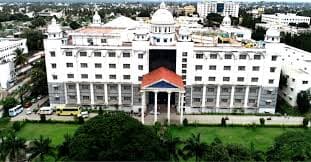
The campus contains lecture halls, laboratories, dissection facilities, library resources, hostels and clinical departments required for complete medical training. Because it is a government institution, the fee structure remains affordable while still providing extensive hospital experience, over time, MIMS Mandya has earned recognition among NEET aspirants seeking strong clinical exposure with practical learning in a government medical setup. The institute continues to contribute significantly to regional healthcare delivery while preparing future medical professionals for service-based medical practice.
Mandya Institute of Medical Sciences Highlights:
Here are the Highlights of Mandya Institute of Medical Sciences (MIMS Mandya):
Particulars | Details |
College Name | Mandya Institute of Medical Sciences Mandya (MIMS Mandya) |
Established | 2005 |
College type | Government (Public Medical University) |
Founder | Government of Karnataka |
Campus Size | Approx. 25+ acres |
Location | Mysuru Main Road, Mandya, Karnataka, India |
Accreditations | Government Medical College (NMC compliant institution) |
University Affiliation | Rajiv Gandhi University of Health Sciences (RGUHS), Bengaluru |
Regulatory Recognition | National Medical Commission (NMC) |
Programs Offered |
|
Intake Per Year |
|
Clinical Exposure | Steady district patient inflow including:
|
Teaching Hospitals | Attached District Government Teaching Hospital, Mandya (multi-speciality services) |
Key Facilities |
|
Library Resources |
|
Hostel Capacity |
|
Sports Facilities |
|
Other Amenities |
|
Strengths |
|
2. Course Details & Fee Structure:
1) MBBS
Seat Intake: 150 seats.
Course Duration: 4.5 Years Academic + 1 Year Compulsory Rotatory Internship.
Fee Structure:
Tuition Fee - Approx Rs. 50,000 - Rs. 65,000 per year (Government quota)
Total Course Fee - Approx Rs. 2.8 - Rs. 3.0 Lakhs for a full course.
2) MD/MS: Seat Intake - 45-65 seats
Specializations | Duration | Approx Fee |
MD General Medicine | 3 Years | Rs. 1.25 - Rs. 3.5 Lakhs |
MD Pediatrics | 3 Years | Rs. 1.25 - Rs. 3.5 Lakhs |
MD Community Medicine | 3 Years | Rs. 1.25 - Rs. 3.5 Lakhs |
MD Pathology / Microbiology / Pharmacology | 3 Years | Rs. 1.25 - Rs. 3.5 Lakhs |
MS General Surgery | 3 Years | Rs. 3.4 - Rs. 3.6 Lakhs |
MS Orthopedics | 3 Years | Rs. 3.4 - Rs. 3.6 Lakhs |
MS Obstetrics & Gynecology | 3 Years | Rs. 3.4 - Rs. 3.6 Lakhs |
MS ENT | 3 Years | Rs. 3.4 - Rs. 3.6 Lakhs |
MS Ophthalmology | 3 Years | Rs. 3.4 - Rs. 3.6 Lakhs |
3. Eligibility, Admission Process and Documents Required:
1) MBBS
Eligibility-
Passed 10+2 / equivalent with Physics, Chemistry, Biology/Biotechnology & English individually.
Minimum 50% marks in PCB (40% for reserved categories as per government norms).
Must be 17 years of age on or before 31 December of admission year.
Qualified NEET-UG conducted by NTA.
Admission Process-
Register and appear for NEET-UG examination.
Participate in counselling through:
MCC (All India Quota).
KEA Karnataka State Counselling.
Fill college preference and select Mandya Institute of Medical Sciences.
Seat allotment based on NEET rank, category and availability.
Report to institute for document verification and fee payment.
Documents Required (UG)-
Class 10 certificate (Date of Birth proof).
Class 12 mark sheet & passing certificate.
NEET-UG scorecard.
NEET-UG admit card.
Allotment letter from counselling authority.
Transfer certificate.
Migration certificate (if applicable).
Category certificate (if applicable).
Valid photo ID (Aadhaar/Passport/Voter ID).
Passport size photographs.
2) MD/MS
Eligibility-
MBBS degree from a recognized university.
Completion of 1 year compulsory rotatory internship.
Valid NEET-PG score.
Permanent / provisional medical registration.
Admission Process-
Register for MCC/KEA PG counselling.
Fill preferred colleges and specializations.
Seat allotment based on NEET-PG rank and seat availability.
Report to college and complete admission formalities.
Documents Required (PG)-
MBBS degree certificate.
Internship completion certificate.
NEET-PG scorecard.
Allotment letter.
Medical registration certificate.
MBBS mark sheets.
Photo ID proof.
Passport size photographs.
4. Strengths & Challenges
Strengths-
Government autonomous medical college under Karnataka Government with RGUHS affiliation and NMC recognition.
Attached 550 bed multi specialty teaching hospital providing continuous clinical exposure.
Large patient inflow from Mandya and surrounding districts enabling strong practical learning .
Focus on affordable healthcare services for rural and semi urban populations.
Community oriented medical training and public health activities.
Competency based MBBS training with hands on hospital postings.
Ongoing infrastructure expansion including critical care units and advanced treatment facilities.
Government fee structure making medical education accessible to students from all backgrounds.
Separate hostels and campus facilities for students and staff.
Active healthcare role in district level programs and emergency care services.
Challenges-
Periodic shortage of doctors and staff affecting workload distribution.
Limited super speciality departments currently available.
Administrative processes slower due to government institutional setup.
Rural location offers fewer metropolitan exposure opportunities.
Students must rely more on self learning alongside clinical training.
5. Conclusion:
The Mandya Institute of Medical Sciences (MIMS Mandya) stands as an important government medical college developed to strengthen healthcare services and medical education in the Mandya region of Karnataka, functioning under the Government of Karnataka and affiliated with Rajiv Gandhi University of Health Sciences, the institute provides undergraduate and postgraduate medical training supported by a government teaching hospital system, the college plays a key role in delivering affordable treatment to the surrounding semi urban and rural population while simultaneously training future doctors through real clinical exposure.
Academic learning at the institute is closely integrated with hospital postings, patient interaction and community based healthcare activities, students gain practical understanding through outpatient departments, inpatient wards, emergency services and public health programs, the competency based curriculum, along with regular case discussions and clinical work, helps in developing both professional skills and medical decision making ability during the course period, as a government institution, the fee structure remains economical, making medical education accessible to a wide section of students. At the same time, the clinical workload ensures strong hands-on experience, which is often considered one of the major advantages of studying in district government medical colleges, although the infrastructure is still expanding and super speciality services are limited, ongoing development projects continue to improve facilities and patient care capacity.