The Kai Digambar Bhanudasrao Lolge Ayurved College Paithan is a private Ayurvedic institute in Maharashtra and it’s still developing day by day its identity in Ayurvedic education, clinical healthcare training and community wellness services. The college came into being under the direction of management that is more oriented toward education and health care, so the main idea was to strengthen traditional Ayurvedic learning along with practical health exposure in the region. In these past years, the institution has been trying to form an academic environment that can back professional Ayurvedic education, while also pushing awareness about whole health approaches and preventive medicine.
The institute is tied with the Maharashtra University of Health Sciences and is approved through the National Commission for Indian System of Medicine, so the learning plan and hospital practice training pattern are kept in sync with national standards for Ayurvedic education. The college mostly provides the Bachelor of Ayurvedic Medicine and Surgery (BAMS program), in which traditional Ayurvedic ideas are blended with guided, hands-on practice and real clinical exposure to form this sort of steady educational setup.
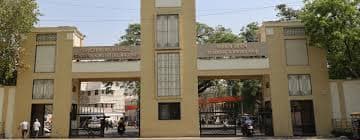
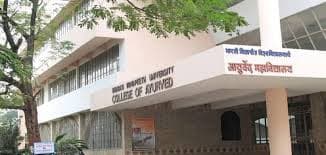
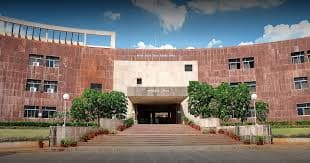
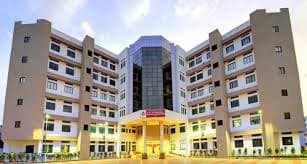
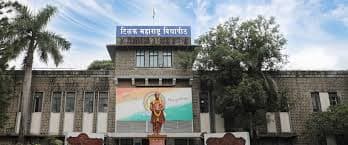
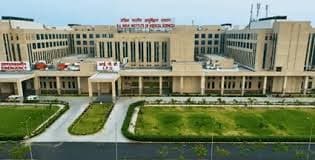
Located at Paithan in Sambhajinagar district, Maharashtra the campus gives a bit of a calm-ish academic vibe, with infrastructure that is steadily being improved. The institution has lecture halls, labs, libraries, seminar spaces and also herbal gardens, plus hostel facilities. There are specialized Ayurvedic departments too, which help for both classroom based learning and practical skill building. Also, attached to it there is an Ayurvedic hospital, where students get supervised clinical exposure through patient care activities and Panchakarma practices under experienced faculty guidance.
The college also pushes research oriented Ayurvedic learning, rural health care awareness initiatives, Panchakarma exposure, and outreach activities with the community. With experienced faculty support, gradually improving facilities, and an emphasis on traditional Ayurvedic principles together with hands-on healthcare training, Kai Digambar Bhanudasrao Lolge Ayurved College goes on contributing toward the making of capable and ethical Ayurvedic practitioners across Maharashtra.
Kai Digambar Bhanudasrao Lolge Ayurved College Paithan Highlights:
The following are the key highlights of Kai Digambar Bhanudasrao Lolge Ayurved College Paithan in Sambhajinagar:
Particulars | Details |
College name | Kai Digambar Bhanudasrao Lolge Ayurveda College |
College type | Private |
Location | Sambhajinagar, Maharashtra |
Affiliated with | Maharashtra University of Health Sciences, Nashik |
Approved by | National Commission for the Indian System of Medicine |
Courses offered | BAMS |
Entrance exams | NEET UG |
Gender | Co-ed |
BAMS annual seats | 60 |
Patients treated | 45000+ |
Official website | |
Category | BAMS Colleges in Maharashtra |
2. Kai Digambar Bhanudasrao Lolge Ayurveda College Course Details and Fee Structure:
BAMS
Seat intake: 60
Duration: 5.5 years (including a year-long internship)
Fee structure:
State Merit Quota - ₹ 2,77,000
All India Quota - ₹ 2,77,000
Institutional Quota - ₹ 6,21,000.
* Note: The afore-mentioned fee structure is the sum of Tuition Fee, Security Deposit, and Laboratory + Library + Other Fee, whereas hostel and mess charges are separate and optional. This fee structure is subject to revision.
3. Kai Digambar Bhanudasrao Lolge Ayurved College Paithan Eligibility, Admission Process, and Documents Required:
Eligibility-
The aspirant must have passed 10+2 with 50% aggregate in the core subjects like: Physics, Chemistry, and Biology with an English language.
For the SC/ST/OBC category candidates must have obtained 40% in the Physics, Chemistry, and Biology with an English language.
The aspirant must have qualified in the NEET-UG exam as per NCISM norms.
The aspirant must be 17 years old or must have crossed 17 years before the admission date.
The aspirant should be medically fit according to the NCISM/AYUSH norms.
Admission Process-
People who are looking for admission into the BAMS course at Kai Digambar Bhanudasrao Lolge Ayurved College Paithan basically first have to crack the NEET UG exam that the National Testing Agency (NTA) conducts. After that, getting admission at the college is mostly driven by NEET UG scores, and then the Maharashtra AYUSH counselling route which is handled by the State Common Entrance Test Cell, Maharashtra.
After the NEET UG result comes, the eligible candidates have to do online registration for Maharashtra AYUSH counselling using the official counselling portal. In the counselling rounds, the applicants should fill in their choice list, preferred colleges and courses, with some care and if they want BAMS admission, Kai Digambar Bhanudasrao Lolge Ayurved College should be added too.
For seat allotment, it is mostly done by NEET merit rank, the reservation system rules, whether the candidate matches the category eligibility, and also how many seats are actually there in the institute. When a seat is confirmed, candidates are expected to report to the college by the deadline given, for document verification, for the medical routines if needed, and for paying the admission fees.
Candidates are typically asked to give a set of important papers like the NEET UG scorecard, Class 10 and Class 12 mark sheets, transfer certificate, domicile certificate, caste certificate if it applies, passport-size photographs, a valid identity proof, and other counselling papers as the admission people tell during the process.
Documents Required-
All candidates who receive an allotment for a seat at this college will be required to report for the completion of their admission formalities by providing the following documents as mentioned below:
Class 10 certificate and mark sheet (for date of birth)
Class 12 certificate and mark sheet
NEET UG admit card
NEET UG scorecard or rank letter
Provisional allotment letter
ID proof (Aadhar/PAN card/Driving license/Passport)
Eight passport-size photographs
Caste certificate (if applicable)
PwD certificate (if applicable)
Character certificate
Migration certificate (if applicable)
Transfer certificate from the institution last attended
Domicile certificate (if required)
Any further documentation that the counselling authority or the institute specifies.
5. Strengths/Challenges:
Strengths-
The Kai Digambar Bhanudasrao Lolge Ayurved College Paithan, Sambhajinagar has slowly started making its presence felt in Ayurvedic education, healthcare training and community wellness services throughout Maharashtra.
The institute is linked to Maharashtra University of Health Sciences and approved by the National Commission for Indian System of Medicine, this kind of approval supports academic as well as clinical standards as per the national Ayurvedic education rules.
Here the college mainly runs the BAMS program, so students study classical Ayurvedic ideas along with supervised practical practice and patient care exposure, in a way that they can build both the theoretical side and the real clinical understanding.
On campus you will find lecture rooms, laboratories, library materials, seminar spaces, herbal gardens, hostels and specialized Ayurvedic departments that basically back up classroom learning and skill based development.
Along with that there is an attached Ayurvedic teaching hospital where learners get direct clinical exposure , through closely guided patient interaction, Panchakarma procedures, diagnostic services, and routine healthcare activities, day after day.
The college also motivates research minded Ayurvedic education, Panchakarma involvement, rural healthcare awareness work, and community outreach events, so students can gather wider public health experience, beyond just theory.
Since it is situated in Paithan, the institution offers a comparatively quiet and steady learning setting, which may help students focus better on their studies and clinical training and yes, keep things more clear in the mind.
Challenges-
Since the institution is comparatively newer than some long established Ayurvedic colleges in India, it is still kind of going through that phase of gaining wider national recognition, and building a more solid long term academic reputation.
Since the college sits in Paithan, students might find that metropolitan benefits are a bit less obvious, like having fewer healthcare networking channels, reduced broader industry exposure, and not as many urban lifestyle facilities either.
Even if infrastructure and academic resources are growing in a steady way, the publicly available info about bigger research partnerships, advanced innovation facilities, and national level academic wins still feels somewhat limited or not very clear.
Like a lot of emerging Ayurvedic institutions, the college may keep running into the usual struggle of attracting greater academic visibility, better research opportunities, plus collaborations across the healthcare sector.
And because Ayurvedic education and healthcare careers are becoming more and more competitive across India, students might later meet tougher competition for postgraduate admissions, clinical roles, and professional placements after they complete graduation.
6. Conclusion:
The Kai Digambar Bhanudasrao Lolge Ayurved College Paithan, Sambhajinagar is slowly but steadily becoming a fairly promising place for Ayurvedic study as well as on the field healthcare practice in Maharashtra. The BAMS program, along with supervised clinical exposure, an attached Ayurvedic hospital, and a strong focus on classic Ayurvedic learning, seems to guide students toward getting a decent mix of theory plus hands on understanding. The institute also encourages Panchakarma exposure, it builds rural healthcare awareness and also supports community outreach programs so students can learn how responsibility looks outside the books, not just inside the lecture rooms. Even if the college is still strengthening its wider academic recognition and overall infrastructure, the improvements that are happening, the experienced faculty support, and the student centered learning environment keep pushing the growth of capable, and also ethical Ayurvedic professionals, in a steady way.