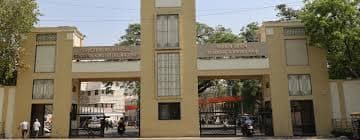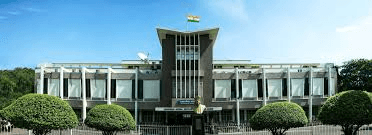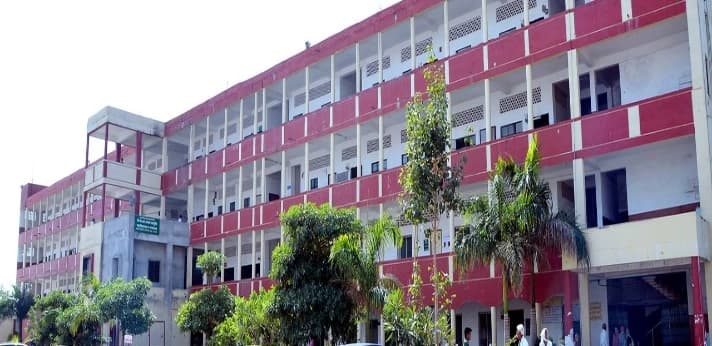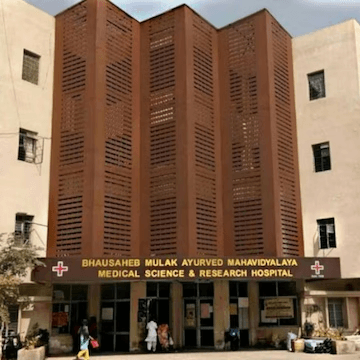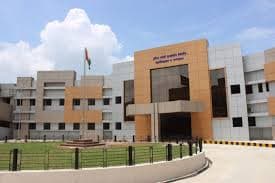
Indira Gandhi Government Medical College, Nagpur, stands as a major public medical institute in Maharashtra because it provides educational programs and medical care and practical training programs to central Indian students. The college began its operations in 1967 under the medical education system of Maharashtra which the Directorate of Medical Education and Research (DMER) oversees. The institution has developed into a primary educational center for undergraduate and postgraduate medical studies while also operating as a vital tertiary healthcare facility for the surrounding area.
The institution offers the MBBS program along with multiple postgraduate MD and MS specialisations across various clinical and non-clinical departments. The courses require students to complete national-level entrance tests which include NEET-UG and NEET-PG before they can participate in government-sponsored counselling. The college's academic system combines theoretical learning with extensive practical experience through its associated teaching hospital.
The university's teaching hospital serves as a training facility for students who work with patients from Nagpur and nearby areas to acquire hands-on experience with various medical conditions and their treatments. The campus provides essential academic infrastructure through its lecture halls and laboratories and library facilities and hostels which support medical training and research activities.
Indira Gandhi Government Medical College has spent several decades training medical professionals who provide healthcare services to strengthen public health services in Maharashtra. The institute maintains its dedication to doctor training while it supports clinical research and community healthcare programs and medical service delivery for the local area.
Indira Gandhi Government Medical College, Nagpur Highlights:
Here's a summary of the important highlights of Indira Gandhi Medical College, Nagpur:
Particulars | Details |
Name of institute | Indira Gandhi Medical College |
Popular name | IGMC Nagpur |
Year of establishment | 1967 |
Institute type | Government |
Location | Nagpur, Maharashtra |
Campus size | 42 acres |
Affiliated to | Maharashtra University of Health Sciences (MUHS), Nashik |
Approved by | National Medical Commission (NMC) |
Courses offered |
|
Popular courses |
|
Application mode | Online |
Admission criteria | Entrance Based |
Entrance exams accepted |
|
Hostel facilities | Yes (Girls & Boys) |
Gender | Co-ed |
Teaching beds | 723+ |
Faculty count | 149+ |
Counselling conducted authority | Government of Maharashtra State Common Entrance Test Cell, Maharashtra |
Official website | |
Category | Medical College in Maharashtra |
2. Course Details and Fee Structure:
1) MBBS: Seat intake - 200
Duration: 4.5 years + 1 year internship.
Fee structure: INR 8.01 Lakhs.
2) MD/MS: Seat intake - 129
Specializations | Duration | Fee structure |
MD Psychiatry | 3 years | INR 4.05 Lakhs |
MD Anesthesiology | 3 years | INR 4.05 Lakhs |
MD Chest And Tuberculosis | 3 years | INR 4.05 Lakhs |
MD Anatomy | 3 years | INR 4.05 Lakhs |
MD Forensic Medicine | 3 years | INR 4.05 Lakhs |
MD Obstetrics & Gynaecology | 3 years | INR 4.05 Lakhs |
MD Pathology | 3 years | INR 4.05 Lakhs |
MD Radiodiagnosis | 3 years | INR 4.05 Lakhs |
MD Biochemistry | 3 years | INR 4.05 Lakhs |
MD Community Medicine | 3 years | INR 4.05 Lakhs |
MD Microbiology | 3 years | INR 4.05 Lakhs |
MD Paediatrics | 3 years | INR 4.05 Lakhs |
MD Pharmacology | 3 years | INR 4.05 Lakhs |
MD Physiology | 3 years | INR 4.05 Lakhs |
MS Opthalmology | 3 years | INR 4.05 Lakhs |
MS Ear, Nose, Throat (ENT) | 3 years | INR 4.05 Lakhs |
MS Orthopaedics | 3 years | INR 4.05 Lakhs |
3. Eligibility, Admission Process, and Documents Required:
Eligibility-
1) MBBS
To gain admission at IGGMC, candidates need to complete 10+2 which requires them to study Physics, Chemistry, Biology and English from a recognized educational board.
The candidates must achieve at least 50% (General category) or 45% (PwD) or 40% (OBC/SC/ST) in PCB at the 10+2 level.
The candidates must pass NEET UG to obtain admission into the MBBS program at IGGMC.
All applicants must fulfill the age requirement by reaching 17 years of age before December 31 in the admission year.
2) MD/MS
The MD/MS program requires candidates to possess an MBBS degree from a recognized medical institution.
The candidate must complete a one-year rotatory internship which exists as a requirement.
The candidate needs to possess an MBBS degree and complete an internship while registering with NMC/State Medical Council.
The MD/MS program requires applicants to pass NEET PG.
Admission Process-
1) MBBS
The MBBS program admission requires candidates to appear for NEET UG exam and pass it.
Following the NEET UG exam, they must also register for MCC (All India Quota seats)/Maharashtra State CET Cell (State quota seats) counselling.
At the time of choice filling, they must fill the preferred college name i.e. IGGMC Nagpur.
The NEET rank along with the reservation rules and the availability of seats determines which candidates will be allotted a seat at IGGMC.
Once they are allotted a seat, they must report to college to verify their documents, pay the required fee, after which their admission will be confirmed.
2) MD/MS
The candidates must qualify NEET PG.
They must register for counselling through MCC (All India Quota) or Maharashtra State CET Cell counselling.
During counselling, the candidates must select their preferred MD/MS specialisations and IGGMC.
The NEET PG rank, reservation norms, and availability are the only parameters that determine the allocation of seats.
Admission is finalized only after the candidate reports to the institute, verifies their documents, and pays the fees.
Documents Required-
Students allotted a seat in this college will need to complete their application process and be required to present the following documents to the academic office.
1) For UG Candidates
Class 10 certificate and mark sheet (for date of birth).
Class 12 certificate and mark sheet.
NEET admit card.
Scorecard or rank letter.
Provisional allotment letter.
ID proof (Aadhar/PAN card/Driving license/Passport).
Eight passport-size photographs.
Caste certificate (if applicable).
PwD certificate (if applicable).
2) For PG Candidates
NEET score card.
MBBS 3rd Part II mark sheet.
MBBS certificate.
Internship completion certificate.
Medical registration certificate.
8 copies of passport size photographs.
If the date of birth is not listed on the HSC mark sheet or certificate, a copy of the birth certificate can be used as proof of age.
A copy of a passport, Aadhar card, PAN card, or driving license (self-attested photocopy after checking with the original documents) or a certificate bearing an attested photo from the head of the institution where the student last attended are examples of photo identity proof.
A copy of the certificate of registration for online counseling.
State Government Sponsorship Certificate, if applicable.
4. Strengths/Challenges:
Strengths-
Government Medical College with Long Academic Legacy: The established government medical college IGGMC in Maharashtra offers structured academic programs together with regulated admission processes and stable faculty systems which are found in public institutions.
Strong Clinical Exposure through Attached Hospital: The college operates a large government hospital that provides tertiary medical services to patients from Nagpur and nearby districts. The hospital's high patient volume enables medical students to develop their clinical skills through actual patient care during their MBBS and postgraduate training.
Wide Range of Medical Departments and PG Courses: The institution offers undergraduate and multiple postgraduate specialisations across clinical and non-clinical disciplines, which enable students to pursue advanced studies at the same campus.
Affordable Government Fee Structure: IGGMC offers medical education at a much lower tuition rate than private medical colleges which makes it the preferred option for students who want to attend based on their academic performance.
Strategic Urban Location in Nagpur: The major city location in Maharashtra gives access to transportation links, which enable academic partnerships and opportunities to study various medical cases.
Challenges-
Infrastructure Modernisation Still Ongoing: Like many older government institutes, the university needs to update its academic buildings and hostels and all other facilities because their current state doesn't meet the requirements of modern medical institutions.
High Patient Load and Work Pressure: The hospital's increased patient volume creates a dual effect for clinical education because it helps students learn but it also creates excessive work responsibilities for interns and residents.
Limited Research Output Compared to Premier Institutes: The university demonstrates effective teaching methods but its research activities and national ranking status show lower performance than leading central universities.
5. Conclusion:
Indira Gandhi Government Medical College in Nagpur operates as a public medical institution which provides affordable medical education to students while offering them extensive clinical training through its associated government hospital facilities. The National Medical Commission recognition of the university and its Maharashtra University of Health Sciences affiliation provide better validation for its medical program. The college maintains its essential function in developing medical professionals through its wide range of undergraduate and postgraduate programs and practical training options and its ongoing healthcare service to the region. The institution continues to function as a reliable option for students who want to study government medical programs in Maharashtra despite facing difficulties with its research and infrastructure development.