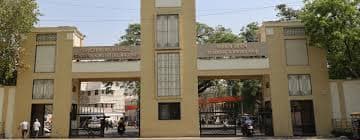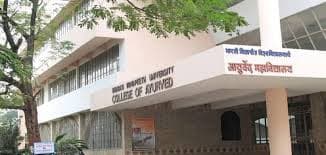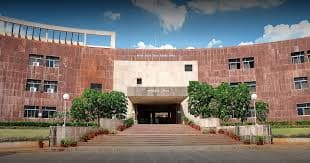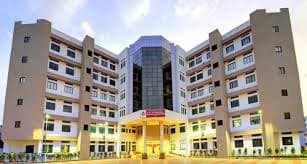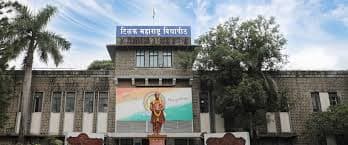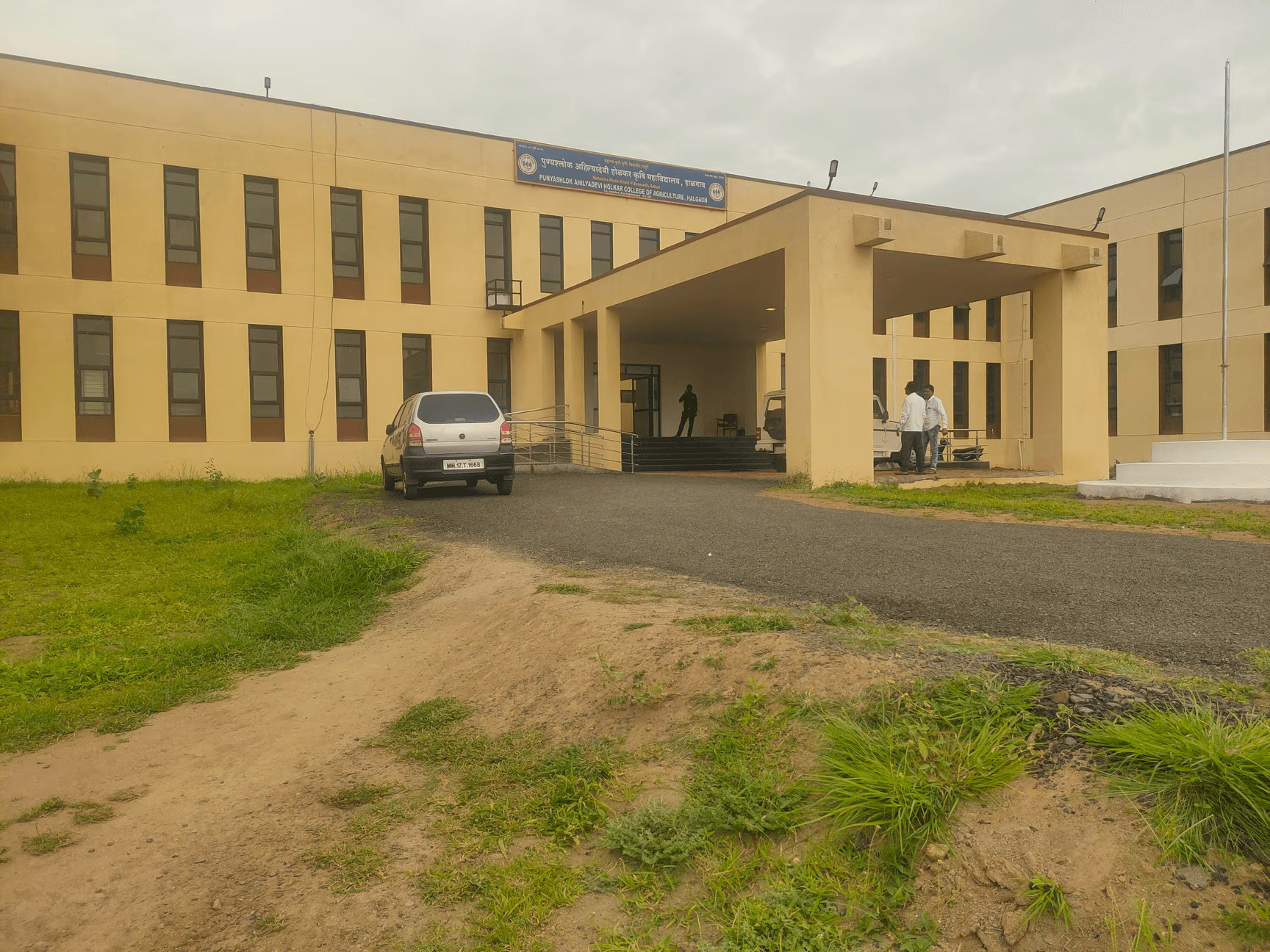
Government Ayurvedic College Baramati is a relatively new but rapidly developing government medical institution located in Baramati, Pune district of Maharashtra. Officially known as Punyashlok Ahilyadevi Holkar Government Ayurvedic College. It was established in 2019 by the Government of Maharashtra with the aim of strengthening healthcare education and services in the region. The college is affiliated with the Maharashtra University of Health Sciences and is recognized by the National Medical Commission (formerly MCI), ensuring that its academic programs meet national standards of medical education. In addition to modern allopathic medical education, Baramati also hosts a government Ayurvedic institution offering the Bachelor of Ayurvedic Medicine and Surgery course (BAMS Course), which is often associated academically and geographically with the broader medical education ecosystem of the region. The BAMS program is a full-time Undergraduate course with a duration of 5.5 years, including a compulsory one-year internship. It focuses on classical Ayurvedic principles along with modern diagnostic approaches, preparing students to practice holistic and traditional Indian medicine.
Admission to the BAMS course is strictly based on performance in the NEET-UG examination, followed by centralized counselling conducted by the State CET Cell of Maharashtra and the All India AYUSH Counselling (AACCC). This ensures a transparent and merit-based admission process aligned with national medical admission standards. The college generally offers around 100 seats for BAMS, making it a competitive option for students interested in Ayurveda. The campus of the medical college and its associated hospital is spread across a well-developed area near the MIDC region of Baramati, with modern infrastructure including academic blocks, laboratories, lecture halls, and a fully functional teaching hospital. The hospital provides clinical exposure through multiple departments, wards, and operation theatres, allowing students to gain practical experience alongside theoretical learning.
Here are the highlights of Government Ayurvedic College Baramati:
The most significant concepts of GACH, Baramati is described in a table format, the students can go ahead on it :
Particulars | Details |
College Name | Government Ayurvedic College Baramati |
Year of Establishment | 2019 |
Establishing Authority | Government of Maharashtra under AYUSH framework |
Campus Profile | 25+ acres |
Geographical Location | Baramati Pune District Maharashtra semi-urban academic zone with healthcare outreach connectivity |
Approval Status | Recognized Government Ayurvedic Institution under national AYUSH education norms |
Affiliated University | Maharashtra University of Health Sciences Nashik |
Regulatory Authority | National Commission for Indian System of Medicine |
Academic Programmes |
|
Annual Intake |
|
Clinical Training Framework |
|
Teaching Hospital Setup |
|
Academic Infrastructure |
|
Knowledge Resource Centre |
|
Residential Facilities |
|
Student Development Facilities |
|
Campus Amenities |
|
Institutional Strengths |
|
Institutional Limitations |
|
Location | Maharashtra Industrial Development Corporation Area, Bandalwadi, Maharashtra 413133 |
2. Government Ayurvedic College Baramati Course details and Fee Structure
The Government Ayurvedic College Baramati primarily offers undergraduate education in the field of Ayurveda under strict regulatory frameworks of AYUSH authorities and affiliated university standards.
1)BAMS
Seat Intake: 60 – 90 seats per year
Duration: 5.5 years (4.5 years academic + 1-year compulsory internship)
Government Ayurvedic College College Baramati Fee Structure:
Annual Fee: approx. INR 30,000 – 46,000
Total Course Fee: approx. INR 2.5 – 3.2 lakh (full course)
3. Government Ayurvedic College Baramati: Eligibility Criteria, Admission process and Documents required
GAC Baramati Eligibility Criteria
The candidate must have passed 10+2 or equivalent with Physics, Chemistry and Biology as core subjects.
Minimum marks required are 50 percent for General category and 40 percent for SC, ST and OBC categories as per norms.
The candidate must qualify NEET-UG examination as it is mandatory for admission.
Minimum age should be 17 years as on 31st December of the admission year.
Admission is purely merit-based based on NEET score.
GAC Baramati Admission Process
Candidates must appear and qualify NEET-UG examination.
Candidate must register for counselling through
All India Quota via AACCC
State Quota via Maharashtra CET Cell.
Fill college choices including Baramati college.
Seat allotment is based on
NEET rank
Category
Availability of seats.
Download the allotment letter.
The candidate must report to the allotted college.
Must complete document verification.
Pay the prescribed fees.
GAC Baramati Documents Required
Class 10 Mark sheet as proof of date of birth.
Class 12 Mark sheet and passing certificate.
NEET Scorecard.
NEET Admit card.
Allotment letter issued during counselling.
Valid identity proof such as Aadhaar Card.
Passport size photographs.
Domicile certificate for State Quota candidates.
Transfer Certificate.
Migration Certificate if applicable.
Medical fitness certificate.
Caste certificate if applicable.
Caste validity certificate for Maharashtra candidates.
Non-creamy layer certificate for OBC candidates.
EWS certificate if applicable.
5. GAC Baramati Strengths and Challenges
GAC Baramati Strengths
Government-funded institutions ensure a low and regulated fee structure.
Recognized by the National Commission for Indian System of Medicine, ensuring standardized education.
Affiliated with Maharashtra University of Health Sciences, providing a structured academic framework.
Availability of an attached 100-bed Ayurvedic teaching hospital supports clinical exposure.
Admission is conducted through a transparent NEET-based process ensuring merit-based selection.
Curriculum is designed as per national competency-based BAMS guidelines.
Balanced integration of classical Ayurveda and modern medical concepts is maintained.
Infrastructure is steadily growing with government support and future expansion potential.
Located in a peaceful and less polluted environment suitable for academic focus.
Increasing patient inflow supports practical learning and clinical case exposure.
GAC Baramati Challenges
Being a relatively new institution, infrastructure is still under development.
Postgraduate courses such as MD or MS in Ayurveda are not available.
Patient inflow may be moderate compared to older and well-established colleges.
Faculty strength and research exposure are still developing.
Advanced research facilities and specialization departments are limited.
Rural location may limit exposure compared to metro-based institutions.
Hostel and campus facilities are basic compared to top-tier colleges.
6. Conclusion
Government Ayurvedic College Baramati (GAC Baramati) stands as a promising government institution for students seeking a career in Ayurveda. With recognition from the National Commission for Indian System of Medicine and affiliation to the Maharashtra University of Health Sciences, the college follows a structured and nationally approved academic framework. The availability of a 100-bed teaching hospital ensures that students gain essential clinical exposure alongside theoretical learning, which is a crucial aspect of medical education. Being a relatively newer institution, the college is still evolving in terms of infrastructure, faculty strength, and academic expansion. However, this also brings opportunities for growth, modernization, and improved facilities over time. The government-backed nature of the college ensures affordability and a transparent admission process through NEET-based counselling, making it accessible to a wide range of students.