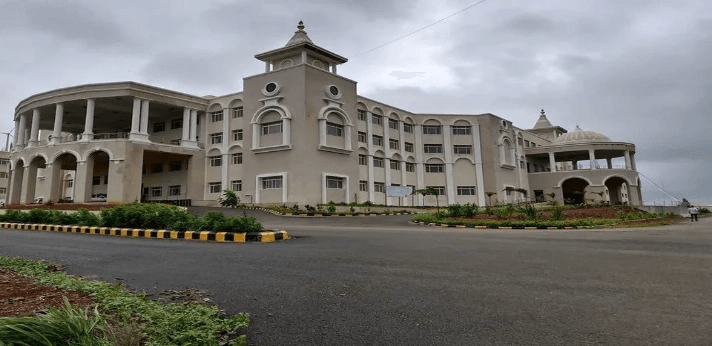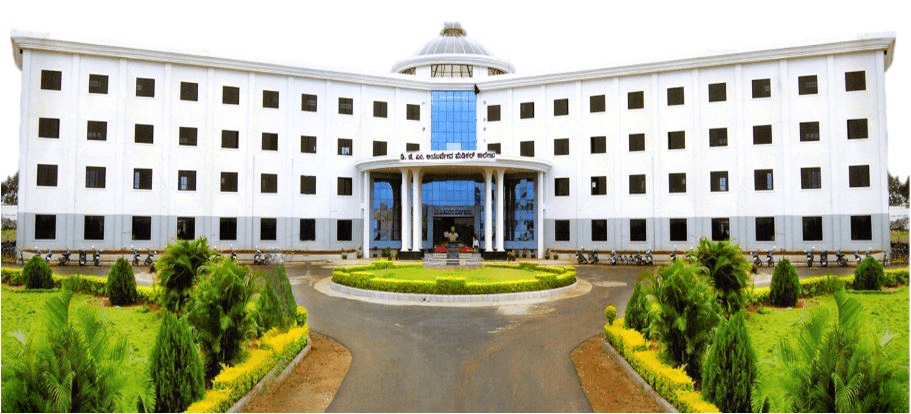
DGM Ayurvedic Medical College (DGMAMC) in Gadag is counted as one of Karnataka’s more recognized places for Ayurvedic education, hands on clinical training, plus research too, you know. This college was established in 1979 by Shree Jagadguru Shivananda Vidya Vardhaka Samsthe (SJSVS) and it sits in Gadag, Karnataka. Further it is affiliated to the Rajiv Gandhi University of Health Sciences (RGUHS), Bengaluru, and it is recognized by the National Commission for Indian System of Medicine (NCISM). So in simple terms, the courses and academic activities are kept in line with the national standards that are expected for Ayurvedic education. Earlier, the institution had its affiliation with Karnataka University , but later it shifted under RGUHS. Since then, it has been growing, both in its teaching activities and its healthcare related support services, bit by bit over the years.
The college has undergraduate level Bachelor of Ayurvedic Medicine and Surgery (BAMS) and also postgraduate MD/MS programs, across a few chosen specializations. The curriculum blends the traditional foundations of Ayurveda together with contemporary teaching methodologies, so that students can build solid theoretical grasp, clinical ability, and research skills, in time. To keep the education quality in place, the institution sets up well arranged classrooms, departmental laboratories, a central library, a herbal garden, and an attached Ayurvedic teaching hospital, where students get a lot of real world clinical practice through both outpatient and inpatient services.
Over the years, DGM Ayurvedic Medical College has made its name for producing competent Ayurvedic professionals. These Ayurvedic professionals, along with contributing to patient care, also promote academics, research, and public health activities. The institution focuses on providing holistic education through its faculty members who are highly experienced in providing structured clinical exposure along with taking part in seminars, research activities, and community health initiatives. Due to DGM Ayurvedic Medical College’s strong academic foundation and quality healthcare facilities and its dedication towards preserving and promoting the Ayurveda’s rich heritage, the college plays a significant role in advancing traditional healthcare services through its Ayurvedic education in Karnataka and across India.
DGM Ayurvedic Medical College Highlights:
Let's examine the key components of DGMAMC Gadag:
Particulars | Details |
College name | DGM Ayurveda Medical College Gadag |
Popular name | DGM Ayurveda College Gadag |
Establishment | 1979 |
Institute type | Private |
Location | Shivananda Nagar, Karnataka |
Campus size | 8 acres |
Ranking | Good |
Affiliated with | Rajiv Gandhi University of Health Sciences, Bangalore |
Approved by | Central Council of Indian Medicines |
Courses offered |
|
UG entrance test | NEET UG exam conducted by NTA |
PG entrance test | All India Ayush Post Graduate Entrance Test (AIAPGET) conducted by NBE |
Gender | Co-ed |
Student count | 248 |
Faculty count | 35 |
Hostel facility | Yes (Female only) |
Official website | |
Category | BAMS Colleges in Karnataka |
2. DGM Ayurvedic Medical College Course Details and Fee Structure:
1) BAMS
Seat intake: 60
Duration: 5.5 + 1 year internship
Fee structure:
All India quota fees - 2,50,000/-
State quota fees - 75,000/-
Management quota fees - 4,00,000/-
NRI quota fees - 6,00,000/- .
2) MD/MS (Ayurveda)
Specialisations | Duration | Fee structure | Seat intake |
MD Ayurveda Panchakarma | 3 years | 7.36 Lakhs | 5 |
MD Ayurveda Rasa Shastra and Bhaishajya Kalpana | 3 years | 7.36 Lakhs | 5 |
MD Ayurveda Kayachikitsa | 3 years | N/A | 5 |
MD Ayurveda Dravyaguna Vigyana | 3 years | 7.36 Lakhs | 4 |
3. DGM Ayurvedic Medical College Eligibility, Admission Process, and Documents Required:
DGMAMC Eligibility-
1) BAMS
The aspirants must have completed the 10+2 intermediate exams or equivalent in the respective core subjects such as: Physics, Chemistry, Biology and English language with 50% aggregate.
And the reserved category aspirant ST/SC/OBC aspirants must have scored 40% aggregate in the PCB and English language.
The aspirants must be 17 years old or must have crossed 17 before the 31st December for the admission process.
2) MD/MS (Ayurveda)
Students are required to have a BAMS degree from any institute that is recognized by the Central Council of Indian Medicine, New Delhi.
Also, completion of a one-year internship is mandatory by or before 31st March for getting into the MD/MS course.
DGMAMC Admission Process-
1) BAMS
The candidates must qualify the entrance exam conducted at national or state-level for the Ayurveda studies.
They must register for the counselling procedure requested by the conducting examination authority.
During the counselling process, DGM Ayurvedic Medical College and Hospital, Gadag should be one of the choices for students.
If a candidate is allotted a seat, they have to visit the college to get their documents verified before taking up the admission procedures.
2) MD/MS (Ayurveda)
The candidates must pass the entrance exam conducted for postgraduate study from Ayurveda college.
They must apply to colleges or centrally, as applicable to the individual cases.
They must attend the counselling/interviews, if given by the DGMAMC itself.
Once qualified, they must appear with all relevant documents for finalising their admission and pay the required fee.
DGMAMC Documents Required-
All candidates who receive an allotment for a seat at this college will be required to report for the completion of their admission procedure by providing the following documents as mentioned below:
1) For UG Candidates
Class 10 certificate and mark sheet (for date of birth)
Class 12 certificate and mark sheet
Admit card
Scorecard or rank letter
Provisional allotment letter
ID proof (Aadhar/PAN card/Driving license/Passport)
Eight passport-size photographs
Caste certificate (if applicable)
PwD certificate (if applicable)
Fee receipt.
2) For PG Candidates
10th standard certificate as proof of birth
AIAPGET admit card
AIAPGET scorecard
BAMS first, second, and third year exam score sheets
The institution's head will award a certificate of Internship completion
The Central Council of Indian Medicine provides the qualifying examination certificate, which is the permanent or provisional BAMS degree certificate
Valid government identity proofs (Aadhar card/PAN card/Voter ID/Driving license, or Passport)
SC/ST/OBC certificate (if required)
A physically handicapped medical certificate (if required).
Etc. & other documents if any.
5. Strengths/Challenges:
Strengths-
Students receive strong clinical exposure through robust hands-on practice at the college’s inbuilt pharmacy and hospital with 24 hours of operation, all of which allows them to learn both traditional and modern medicine techniques.
The college offers MD program in specializations such as Kayachikitsa, Panchakarma, Dravyaguna, and Rasashastra that enables students in their continuous academic development.
The college plays an important role in actively publishing research and producing textbooks, because it is backed by state government projects like VGST and K-FIST.
Since its establishment in 1979, the college has a multi-lingual teaching approach and along with this, it also features classrooms that are well-ventilated, a digital library, and hostels for both genders.
Challenges-
Located in Gadag about 62 km from Hubli Airport, the college seems to miss that high-patient footfall and the varied clinical exposure you often see in bigger metropolitan hospitals, in general.
Like many BAMS colleges, graduates end up in a bit of industry ambiguity around what their legal authority actually is to prescribe modern allopathic medicine within regular hospital environments.
The BAMS program itself has a limited capacity, 60 seats, so the student group stays smaller and peer networking doesn’t really match what happens in those larger university hubs.
Traditional Ayurvedic placements can be less formalized than what corporate medicine typically offers, so students may end up leaning more on building a private practice rather than expecting a neat corporate style placement.
6. Conclusion:
DGM Ayurvedic Medical College, Gadag has pretty much established itself as a reputed setup for quality Ayurvedic education, clinical training, and also research work across Karnataka. The place is known for its experienced faculty, a teaching hospital that’s well equipped, and that kind of research oriented atmosphere where students actually get room to learn, and then apply what they know. Along with the undergraduate and postgraduate programs, the college gives a solid academic, plus hands on groundwork in Ayurveda, so students are not only reading but also seeing things in a practical manner. Still, there are some challenges now and then like limited exposure to major metropolitan life and, honestly, a smaller student intake, but that does not remove its value. It keeps leaning into holistic learning, community health care , and the preservation of traditional Ayurvedic knowledge, so for many aspiring Ayurvedic professionals it ends up being a preferred option. Overall, the institution continues to play a major part in the growth of Ayurveda and healthcare services throughout India.