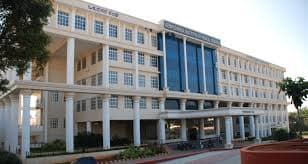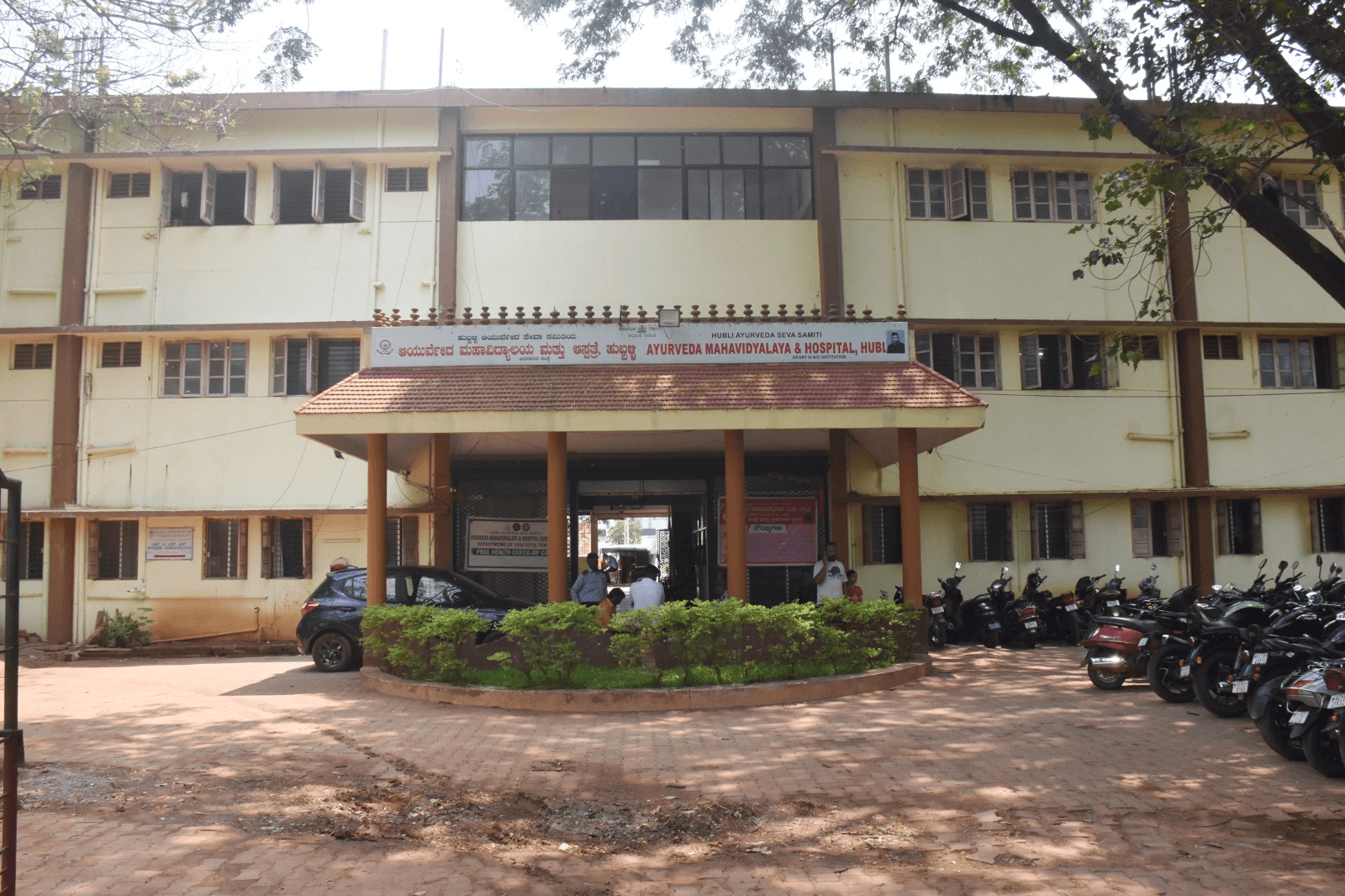
Ayurved Mahavidyalaya and Hospital, Hubli is one of the oldest and most respected private Ayurvedic institutions in Karnataka, located in the Heggeri Extension area of Old Hubli (Hubballi). It is equipped with a well-structured 5-acre campus that includes modern laboratories, an extensive herbal garden, a library, and classrooms, along with an attached Ayurvedic teaching hospital that provides clinical training to students while offering quality healthcare to the local community. Over the decades, the institution has built a strong reputation as a center for traditional Ayurvedic learning combined with clinical practice, making it a preferred destination for students pursuing careers in Ayurvedic medicine and surgery.
The college was founded in 1954 by Vaidyaguru D.A. Halasikar with the goal of developing Ayurveda and delivering quality treatment via indigenous medical systems. The founder envisioned an institution that would not only impart theoretical knowledge of Ayurveda but also produce skilled and dedicated practitioners, or Vaidyas, who could serve society through this ancient system of medicine. AMH Hubli is a well-known Government Aided Ayurvedic College in Karnataka, recognized by the National Commission for Indian System of Medicine (NCISM), and it is affiliated to Rajiv Gandhi University of Health Sciences, Bangalore. Since its founding, the institute has offered undergraduate, postgraduate, and doctoral-level programs, gradually expanding its academic scope while staying rooted in its founder's original mission.
The institution is managed by the Hubli Ayurveda Seva Samithi (HASS), a body that has carried forward the founder's vision since the college's establishment. The college continues to be supported and patronaged by well-experienced, dedicated managing committee members, and its stated vision is to spread Ayurveda both nationally and globally. This exclusive managing committee takes board-level decisions concerning the institution's affairs, ensuring continuity in academic quality and administrative direction. Under this management structure, the college has maintained its identity as a private, government-aided institution that blends traditional Ayurvedic values with modern educational and clinical infrastructure, cementing its place as one of the leading Ayurvedic colleges in Hubli and across Karnataka.
Highlights of AMH, Hubli:
Particulars | Details |
Institute Name | Ayurved Mahavidyalaya and Hospital |
Popular Name | Ayurved Mahavidyalaya and Hospital |
Institute Type | Government aided Private institutions |
Establishment | 1954 |
Founder | Vaidyaguru D.A. Halasikar |
Managed | Hubli Ayurveda Seva Samithi (HASS) |
Accreditation | |
Recognition | National Commission for Indian System of Medicine (NCISM) |
Grade | |
Affiliation | Rajiv Gandhi University of Health Sciences (RGUHS), Karnataka. |
Campus size | 5 Acres |
Gender intake | Co - education |
Course offered | BAMS MD/MS |
Seat undertaken | BAMS - 60 MD/MS - 31 |
Exam undertaken | NEET UG |
Hospital Bed Capacity | 120 |
Student Count | 100 |
Faculty count | |
Doctors | |
Location | 84QG+F38, Heggeri Colony, Old Hubli, Hubballi, Karnataka 580024 |
Official website |
Course Details and Seat Intake
BAMS - Seat Intake : 60
Course: 5 Year and 6 months
Internship : One year of rotary residential internship.
Fee structure
General Quota: 1.28 lakhs (PA)
MD/MS
MD
Specialisation | Duration | Fee structure |
Kayachikitsa | 3 years | Govt Quota: 1,00,500 Private Quota: 3,68,000 |
Rasashastra and Bhaishajya Kalpana | 3 Years | Govt Quota: 1,00,500 Private Quota: 3,68,000 |
Ayurveda Samhita Siddhanta | 3 years | Govt Quota: 1,00,500 Private Quota: 3,68,000 |
Panchakarma | 3 Years | Govt Quota: 1,00,500 Private Quota: 3,68,000 |
Rachana Shareera | 3 years | Govt Quota: 1,00,500 Private Quota: 3,68,000 |
Roganidana Avum Vikriti Vigyana | 3 Years | Govt Quota: 1,00,500 Private Quota: 3,68,000 |
MS
Specialisation | Duration | Fee structure |
Shalyatantara | 3 Years | Govt Quota: 1,00,500 Private Quota: 3,68,000 |
AMH Hubli Eligibility Criteria and Admission Process:
To get secured in AMH Hubli campus kindly follow the below given eligibility and admission process to fill right way:
AMH Hubli Eligibility Criteria
BAMS
The aspirants must have completed the 10+2 intermediate exams or equivalent in the respective core subjects such as: Physics, Chemistry, Biology and English language with 50% aggregate.
And the reserved category aspirant ST/SC/OBC aspirants must have scored 40% aggregate in the PCB and English language.
The aspirants must be 17 years old or must have crossed 17 before the 31st December for the admission process.
MD/MS
The aspirants enrolling into the system kindly need to complete BAMS Degree and must have a certificate from a recognised university.
The aspirants must have completed one year rotatory residential internship.
The age limits of the aspirants must be 17 years old or must have crossed 17 before 31st December.
AMH Hubli Admission Process
To get admitted in the AMH Hubli the aspirants need to follow all the below mentioned admission process:
BAMS
The candidates must qualify the NEET-UG test conducted by the NCISM and Ministry of AYUSH.
Once the aspirants are qualified, complete the counselling process set by the KEA.
During the choice filling option select AMH, Hubli and BAMS course as your first preference.
The seat allotment will go according to the aspirants NEET score, Category, Seat availability, and results online.
Once the aspirants allot the seats, report to the college on the prescribed date.
Complete all the documents verification and pay the fees, and join the BAMS Course.
MD/MS
Candidates must appear for the AIAP GET exam and get qualified in the exam, conducted by the National Testing Agency.
Once the results are outdated candidates must apply for counselling conducted by the AACCC.
During the choice, select the AMH Hubli and MD/MS program.
The seat will only be allotted based on the candidate's merits in AIAP GET, and reservation norms.
On a specific date prescribed by the college visit the college with the documents and submit the documents for the verification.
Pay the tuition fee and confirm the seat in the college.
Essential Documents:
Once the aspirants are allotted in the institute, kindly need to submit all the essential documents to verify, so follow the below mentioned documents:
For UG Program:
Scorecard and Admit card of NEET UG.
Class 10+2 marksheets and certificate (birth certificate for DOB proof)
Study certificate
Domicile certificate
Transfer certificate
Character certificate
Medical fitness certificate
Valid ID (updated Aadhar card/PAN Card/Driving License/Passport).
Aadhar card of parents with the xerox copy.
10 passport size photographs.
Confirmation slip.
RTGS slip.
KEA Application form.
Verification slip.
Provisional Allotment letter.
PwD Certificate.
Fee receipt.
For PG Candidates
Aadhar card
Admit card of Aiapget
Score card of Aiapget
10th marks card
12th Marks card
Study certificate
Bams marks card of all 1 to last year
Qualifying degree certificate (final certificate of bams)
Internship completion certificate
Registration certificate of bams
Passport size photo
Migration certificate
Transfer Certificate/ Character Certificate
Strength
Legacy and Heritage: The institution was inaugurated in 1954 by Vaidyaguru DA Halasikar, and the AMH Hubli is one of the oldest Ayurvedic institutions in Karnataka which is functioning from seven decades with accumulated experience, alumni network, and credibility in traditional medical education.
Recognition, Affiliation and Approvals: The college is affiliated to Rajiv Gandhi University of Health Sciences (RGUHS), Bangalore, and is recognized by the National Commission for Indian System of Medicine (NCISM) as well as the Ministry of AYUSH, giving its degrees national validity and acceptance.
Infrastructure and Campus Facilities: Spans over a 5-acre campus, the institution has well-ventilated classrooms with audio-visual aids, a library with a digital facility, an herbal garden with around 250 medicinal plants for practical demonstration, and separate hostel facilities for boys and girls with dedicated wardens.
Associated Teaching Hospital: The college has its own Ayurvedic hospital with OPD and IPD services, a well-equipped laboratory functioning all seven days a week, and an operation theatre, giving students direct clinical exposure alongside classroom learning.
Academic Range: It offers a full spectrum of programs — UG - BAMS, MD/MS in various Ayurveda specializations at the postgraduate level,meeting CCIM norms.
Government-Aided, Community-Rooted Status: Being a government-aided campus and managed by the Hubli Ayurveda Seva Samithi (HASS), it benefits from both community trust and a degree of public support, while still operating with the flexibility of private management.
Challenges
Regional and Competitive Visibility: Unlike some Top - notch institutions, AMH does not appear to carry a distinct NIRF ranking of its own, which can make it less visible nationally compared to more prominently ranked medical and Ayurveda colleges.
Admission Cutoff Issues: NEET/AYUSH counselling data shows relatively high closing ranks in recent years, suggesting the college often becomes a competitive situation to aspirants rather than a first preference, which can affect the academic profile of upcoming batches.
Limited seat Capacity: The institution intake BAMS seats of around 40–60 seats, and the college has a modest annual capacity, which can restrict its overall output and limit opportunities compared to private institutions.
Infrastructure Modernization: While facilities are described as adequate and CCIM-compliant, ongoing modernization — such as expanding digital learning tools, developing laboratories, and increasing research output — is a continuous challenge for older institutions competing with newer, more heavily funded Ayurveda colleges.
Placement and Career Support Visibility: Detailed, transparent placement statistics or industry tie-ups are not prominently available in public records, which can make it harder for prospective students to assess post-graduation career outcomes compared to colleges with well-publicized placement cells.
Balancing Tradition with Modern Ayurveda Practice: Unlike many long-established Ayurvedic institutions, there is an ongoing challenge in integrating traditional Ayurveda with modern evidence-based medical research and interdisciplinary healthcare trends, to stay competitive with newer AYUSH colleges emphasizing integrative medicine.
Conclusion
Ayurved Mahavidyalaya and Hospital, Hubli is a well-established Ayurvedic institution founded in 1954 by Vaidyaguru D.A. Halasikar and managed by the Hubli Ayurveda Seva Samithi (HASS), and over its seven-plus decades it has built a solid reputation through NCISM recognition, affiliation with Rajiv Gandhi University of Health Sciences, a functional teaching hospital, and hands-on clinical and academic training across UG and PG Programs. While it offers a strong grounding in traditional Ayurveda practice and enjoys community trust as a government-aided college, it faces typical challenges of an older regional institution, including: limited seat capacity, modest national visibility in rankings, and the ongoing need to modernize infrastructure and integrate contemporary research with classical teaching—making it a solid choice for students prioritizing authentic Ayurvedic training and clinical exposure, though those seeking larger-scale infrastructure or top-tier national rankings may want to compare it with more prominently ranked AYUSH colleges.