
1. Introduction.
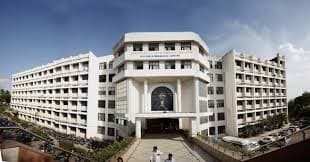
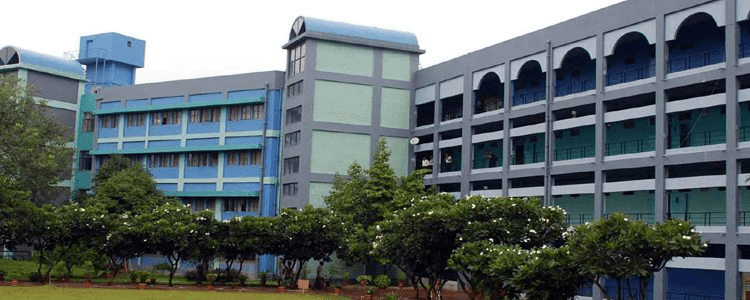
Vishwakarma Institute of Technology Pune (VIT Pune), is a prominent autonomous engineering institute established on 1 September 1983 with the vision of providing quality technical education at a time when engineering opportunities in Maharashtra were limited. The institute was founded under the Bansilal Ramnath Agarwal Charitable Trust (BRACT) and began its journey from a modest facility before shifting to its present Bibwewadi campus in 1987, where it steadily developed into a reputed centre of technical learning. VIT Pune is permanently affiliated with Savitribai Phule Pune University and was granted academic autonomy in the academic year 2008-09, becoming one of the first private self financed autonomous engineering colleges in the state.
The autonomous status allows the institute to design its own curriculum, academic calendar, and evaluation system to keep pace with industry expectations and technological advancements. The institute offers a wide spectrum of Undergraduate (BE / B.Tech), Postgraduate (M.Tech) and Doctoral Programmes across major engineering disciplines such as : Computer Engineering, Information Technology, Mechanical Engineering, Electronics & Telecommunication, Chemical Engineering, Civil Engineering and emerging specialisations in Artificial Intelligence and Data Science. Emphasis is placed on outcome based education, project learning, internships, and professional development courses to ensure employability and holistic growth of students.
VIT Pune promotes research, innovation and global exposure through collaborations, internships, and interdisciplinary learning opportunities. The academic framework also integrates open electives, skill development courses, and industry interaction to prepare students for careers in industry, entrepreneurship, higher studies and public services; the institute aims to produce technically competent, socially responsible and ethically grounded engineers.
Here are the highlights of Vishwakarma Institute of Technology (VIT Pune) :
The VIT Pune important roles are mentioned in a tabulated format down below, can through it :
PARTICULARS | DETAILS |
Institute Name | Vishwakarma Institute of Technology Pune (VIT Pune) |
Popularly Known As | VIT Pune |
Established | 1983 |
Founder | Bansilal Ramnath Agarwal Charitable Trust (BRACT) |
Institute Type |
|
NIRF Ranking (Engineering) | Not Ranked in Recent NIRF Engineering List |
Location | Bibwewadi, Pune, Maharashtra |
Nearest City | Pune |
Campus Area | Urban Campus (Bibwewadi) |
Key Facilities |
|
Accreditations |
|
Governing Body | Bansilal Ramnath Agarwal Charitable Trust (BRACT) |
Admission Mode |
|
University Affiliation | Savitribai Phule Pune University (SPPU) |
Entrance Exams |
|
Total B.Tech Seat Intake | Approx. 1140 Seats |
Total M.Tech Seat Intake | Approx 54 Seats |
Counselling Authority | Maharashtra State Common Admission Process (CAP) |
Courses Offered |
|
Official Website |
2. Course Details and Fee Structure.
The Vishwakarma Institute of Technology Pune (VIT Pune) offers Undergraduate and Postgraduate Engineering Programmes under its autonomous academic structure while being permanently affiliated with Savitribai Phule Pune University. Admissions to B.Tech programmes are conducted through Maharashtra state level entrance examinations, primarily MHT-CET and JEE Main as per state counselling norms, while M.Tech admissions are based on GATE or state PGCET depending on seat category. The fee structure mentioned below is specialization specific and approved by the Fee Regulating Authority (Government of Maharashtra).
1) B.Tech Programmes
B.TECH Specializations | DURATION | ANNUAL FEES (Approx) | SEAT INTAKE (Approx) |
Computer Engineering | 4 Years | INR 2.12 – 2.13 Lakh | 180 |
Information Technology | 4 Years | INR 2.12 – 2.13 Lakh | 180 |
Electronics & Telecommunication Engineering | 4 Years | INR 2.12 – 2.13 Lakh | 180 |
Mechanical Engineering | 4 Years | INR 2.12 – 2.13 Lakh | 120 |
Chemical Engineering | 4 Years | INR 2.12 – 2.13 Lakh | 60 |
Instrumentation Engineering | 4 Years | INR 2.12 – 2.13 Lakh | 60 |
Artificial Intelligence | 4 Years | INR 2.12 – 2.13 Lakh | 60 |
Artificial Intelligence & Data Science | 4 Years | INR 2.12 – 2.13 Lakh | 120 |
Computer Science & Engineering (AI & ML) | 4 Years | INR 2.12 – 2.13 Lakh | 60 |
Computer Science & Engineering (Data Science) | 4 Years | INR 2.12 – 2.13 Lakh | 60 |
Computer Science & Engineering (IoT & Cyber Security including Blockchain Technology) | 4 Years | INR 2.12 – 2.13 Lakh | 60 |
2) M.Tech Programmes
M.TECH Specializations | DURATION | ANNUAL FEES (Approx) | SEAT INATEK (Approx) |
Computer Engineering | 2 Years | INR 93,000 | 18 |
Electronics & Telecommunication Engineering | 2 Years | INR 93,000 | 18 |
Mechanical Engineering (Design) | 2 Years | INR 93,000 | 18 |
3. Eligibility, Admission Process, and Documents Required.
1) B.Tech
Eligibility Criteria-
The applicant must have completed 10+2 or equivalent from a recognized board.
Physics and Mathematics must be compulsory subjects in Class 12.
In addition to Physics and Mathematics, the candidate should have studied at least one of the following:
Chemistry
Biotechnology
Biology
Computer Science / Information Technology
Electronics
Minimum qualifying marks in the aggregate of required subjects:
45% for General category candidates
40% for reserved category candidates (as per government regulations)
Admission is granted on the basis of a valid score in:
MHT CET
JEE Main
2) M.Tech
Eligibility Criteria-
Candidates must have completed B.E. / B.Tech in the relevant discipline from a recognized university.
Minimum marks required:
50% for General category
45% for reserved categories
Admission is based on:
GATE score
State PGCET merit
B.Tech
Admission Process-
Candidates need to appear for MHT-CET or JEE Main entrance examination.
After results, eligible candidates must register for Maharashtra State Centralized Admission Process (CAP) counselling.
Applicants fill college and branch preferences during counselling.
Seats are allotted according to merit rank, reservation category and availability of seats.
Selected candidates confirm admission by payment of the prescribed fees within the deadline.
Final admission is confirmed only after verification of documents and eligibility at the institute level.
M.Tech
Admission Process.
Applicants must qualify GATE or State PGCET examination.
Eligible candidates participate in counselling for seat allotment.
Allotment is done based on merit, category and seat availability.
Candidates complete admission formalities and pay fees within the stipulated time.
Admission is finalized after verification of academic documents at the institute.
B.Tech
Documents Required.
10th Standard Marksheet (proof of date of birth).
12th Standard Marksheet.
Entrance Examination Scorecard (MHT-CET / JEE Main).
CAP Seat Allotment Letter.
School leaving / Transfer Certificate.
Migration Certificate (if applicable).
Category certificate (SC/ST/OBC/EWS), if applicable.
Passport size photographs.
Valid government identity proof (Aadhaar / Passport / Voter ID / Driving License)
M.Tech
Documents Required-
All semester Marksheets of qualifying Degrees.
Degree Certificate / Provisional Certificate.
GATE / PGCET scorecard.
Counselling Allotment Letter.
Transfer Certificate (TC).
Migration Certificate (if applicable).
Category Certificate (if applicable).
Identity proof and passport size photographs.
5. Strengths and Challenges.
Strengths.
Vishwakarma Institute of Technology has been functioning since 1983 and has developed a stable academic environment focused on engineering education and professional learning.
The institute operates under autonomous status which allows regular curriculum revision and inclusion of industry-oriented subjects and project-based learning.
Industry interaction activities such as : internships, workshops and technical sessions support practical exposure for students.
Availability of departmental laboratories, library resources and computing facilities supports academic and project work.
Dedicated training and placement support helps students prepare for recruitment processes through aptitude training and skill development sessions.
Students participate in technical, cultural and co-curricular activities which contribute to overall personality development.
Alumni presence in different industries contributes to networking opportunities and career guidance for students.
Challenges-
Continuous technological changes require frequent syllabus updates and upgrading of laboratory resources.
Competition among students in popular branches can influence placement distribution depending on individual skill levels.
Students need consistent self-preparation to meet company recruitment standards as selection processes are multi-stage.
Expansion of facilities is limited within an urban campus setting compared to large residential campuses.
Balancing academic workload with skill development and industry readiness requires individual effort from students.
6. Conclusion.
Vishwakarma Institute of Technology Pune (VIT Pune) has evolved as a well established engineering institute offering structured technical education through its autonomous academic system while remaining affiliated with Savitribai Phule Pune University. The institute provides Undergraduate and Postgraduate Programmes supported by departmental laboratories, library resources, training activities and student support services that collectively promote both theoretical learning and practical understanding. The academic approach integrates classroom teaching with project work, seminars, workshops and internship opportunities. Being located in Pune, a major educational and industrial centre, students benefit from exposure to companies, technical communities and professional activities conducted throughout the academic year. Training and placement initiatives, technical societies and co-curricular participation further contribute to overall student development.
The institute maintains a steady academic environment where students are encouraged to build technical knowledge along with professional skills, at the same time, individual preparation and continuous learning remain important for meeting industry expectations and competitive recruitment processes. Vishwakarma Institute of Technology functions as an organized engineering campus with consistent academic practices and industry interaction.