The University Visvesvaraya College of Engineering (UVCE), Bangalore was established in 1917 and is one of the oldest government engineering colleges in India, located in Bengaluru. The institute was founded by Bharat Ratna Sir M. Visvesvaraya with the aim of developing technically skilled engineers for infrastructure and industrial growth. Over the decades the college has developed into a public engineering institution offering Undergraduate and Postgraduate Programs in core engineering and technology disciplines. Popular B.E. branches include Computer Science and Engineering, Information Science, Electronics and Communication Engineering, Electrical Engineering, Mechanical Engineering and Civil Engineering along with selected postgraduate specializations. The institute functions as a constituent college under Bangalore University which governs academic regulations, examinations and degree awarding while the departments continue updating laboratories and teaching practices to match modern engineering requirements.
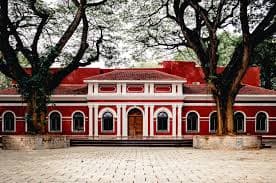
The campus of UVCE is situated near K.R. Circle in central Bengaluru which provides academic advantage due to proximity to government departments, research institutions, public sector units and the city’s IT ecosystem. The campus includes : academic blocks, departmental laboratories, central workshops, library facilities and student activity areas focused primarily on academic learning and technical training. The institute is known for its strong academic foundation, emphasis on core engineering concepts and large alumni network contributing across government services, infrastructure organizations, research institutions and private technology companies. Being a historic public engineering college, UVCE maintains a traditional teaching approach supported by practical exposure through laboratories and projects.
UVCE records regular recruitment from IT services, product companies and engineering organizations, due to its legacy, affordable government education structure and alumni presence in industry. University Visvesvaraya College of Engineering continues to remain a recognized government engineering institution in Bangalore for students seeking fundamental engineering education with long institutional heritage.
Here are the highlights of University Visvesvaraya College of Engineering (UVCE) :
The major elements of UVCE, Bangalore is listed in a table format, kindly go through it :
Particulars | Details |
Institute Name | University Visvesvaraya College of Engineering (UVCE) |
Popularly Known As | UVCE Bangalore |
Established | 1917 |
Founder | Bharat Ratna Sir M. Visvesvaraya |
Institute Type | Autonomous Institution |
NIRF Ranking (Engineering) | N.A |
Location | K.R. Circle, Dr. Ambedkar Veedhi, Bengaluru, Karnataka. |
Nearest City | Bengaluru |
Campus Area | 50 Acres |
Key Facilities |
|
Accreditations |
|
Governing Body |
|
Admission Mode | Entrance-Based Counselling |
University Affiliation | Bangalore University |
Entrance Exams |
|
Total B.Tech Seat Intake | 420 Seats |
Total M.Tech Seat Intake | 90–108 Seats |
Counselling Authority | Karnataka Examination Authority (KEA) |
Courses Offered | |
Official Website |
2. Course Details and Fee Structure.
The University Visvesvaraya College of Engineering (UVCE), Bangalore offers Undergraduate and Postgraduate Engineering and Architecture Programs under Bangalore University academic regulations. Admissions to B.E programs are mainly based on KCET 2026 counselling conducted by the Karnataka Examination Authority (KEA), while postgraduate admissions are conducted through GATE / Karnataka PGCET depending on seat category. The fee structure mentioned below for the programs is course specific and varies slightly as per government notifications.
1) B.E / B.Tech Programs :
B.Tech Specializations | DURATION | ANNUAL FEES (Approx) | SEAT INTAKE (Approx) |
Computer Science & Engineering | 4 Years | INR 22,000 – 25,000 | 60–70 |
Information Science & Engineering | 4 Years | INR 22,000 – 25,000 | 60 |
Artificial Intelligence & Machine Learning | 4 Years | INR 22,000 – 25,000 | 60 |
Electronics & Communication Engineering | 4 Years | INR 22,000 – 25,000 | 60 |
Electrical & Electronics Engineering | 4 Years | INR 22,000 – 25,000 | 60 |
Mechanical Engineering | 4 Years | INR 22,000 – 25,000 | 60 |
Civil Engineering | 4 Years | INR 22,000 – 25,000 | 60 |
2) M.Tech / M.E Programs.
M.Tech Specializations | DURATION | ANNUAL FEES (Approx) | SEAT INTAKE (Approx) |
Computer Science Engineering | 2 Years | INR 1.0 – 1.51 Lakh | 18 |
Electronics & Communication | 2 Years | INR 1.0 – 1.51 Lakh | 18 |
Structural Engineering | 2 Years | INR 1.0 – 1.51 Lakh | 18 |
Machine Design | 2 Years | INR 1.0 – 1.51 Lakh | 18 |
Software Engineering & Other Specializations | 2 Years | INR 1.0 – 1.51 Lakh | 18 |
3. Eligibility, Admission Process, and Documents Required.
1) B.E / B.Tech.
Eligibility Criteria
The candidate must have completed 10+2 or equivalent from a recognized board.
Physics and Mathematics must be compulsory subjects in Class 12.
Along with Physics and Mathematics, the candidate must have studied at least one of the following subjects:
Chemistry.
Biotechnology.
Biology.
Computer Science.
Electronics.
Minimum aggregate marks required in qualifying examination:
45% for General Category.
40% for SC/ST and reserved categories (as per government norms).
Admission to B.E program is based on a valid score in:
KCET (Karnataka Common Entrance Test).
2) M.Tech / M.E
Candidates must have completed B.E / B.Tech in relevant discipline from a recognized university.
Minimum aggregate marks required:
50% for General Category.
45% for reserved categories.
Admission based on valid scores in:
GATE or Karnataka PGCET.
B.E / B.Tech
Admission Process
Candidates must appear for KCET conducted by the Karnataka Examination Authority (KEA).
After results, eligible candidates participate in centralized counselling.
During counselling, candidates should select UVCE and preferred branch based on rank.
Seat allotment is done based on merit, reservation policy and seat availability.
Candidates confirm admission by paying the prescribed fees.
Final admission is completed after document verification at the institute.
M.E / M.Tech
Admission Process
Candidates must qualify GATE or Karnataka PGCET examination.
Participate in the state counselling process.
Branch allotment done based on merit and category.
Selected candidates should complete the admission formalities and fee payment.
Admission confirmed after verification of documents at the institute.
B.E / B.Tech
Documents Required
Class 10 marks card (Date of birth proof).
Class 12 or equivalent marks card and pass certificate.
KCET rank card and allotment order.
Transfer Certificate.
Migration Certificate (if applicable).
Category certificate (SC/ST/OBC/EWS if applicable).
Income certificate (if applicable).
Passport-size photographs.
Aadhaar / valid identity proof.
M.E / M.Tech
Documents Required.
Bachelor’s Degree Marksheets (all semesters).
Degree / Provisional Certificate.
GATE / PGCET Scorecard.
Allotment letter from counselling authority.
Transfer Certificate (TC).
Migration Certificate (if applicable).
Category Certificate (if applicable).
Identity proof (Aadhar Card/ PAN Card/ Driving License/ Passport)
Passport Size photographs.
4. Strengths and Challenges.
Strengths
University Visvesvaraya College of Engineering (UVCE) has a historic academic legacy since 1917 and is among the earliest engineering institutions established in India for technical education.
Being a government college under Bangalore University, the institute offers highly affordable engineering education compared to private engineering institutions.
The central Bengaluru location provides exposure to research organizations, public sector undertakings and technology companies which supports internships and industry interaction.
A strong alumni network working in administration, public infrastructure, research organizations and private technology sector contributes to institutional reputation.
Emphasis on fundamental engineering concepts and practical laboratory learning supports conceptual clarity rather than only exam oriented study.
Regular campus recruitment is conducted with participation from IT services, product companies and engineering organizations through the placement cell.
The institute maintains traditional engineering departments such as : Civil, Mechanical and Electrical along with modern computing branches ensuring a balanced academic structure.
Challenges
Being a heritage government campus, infrastructure modernization progresses gradually compared to newly built private campuses.
Limited residential capacity means many students rely on external accommodation in the city.
Placement opportunities vary depending on student skill level and preparation because companies follow competitive selection processes.
As a university affiliated college, curriculum updates may take longer compared to fully autonomous institutions.
Large demand for limited seats leads to high academic competition among students.
5. Conclusion.
The University Visvesvaraya College of Engineering (UVCE), Bangalore has functioned for more than a century as a government engineering college affiliated with Bangalore University, delivering structured technical education through its core and modern engineering departments. The institute supports its programs through classrooms, departmental laboratories, workshops, library resources and academic guidance systems designed around fundamental engineering learning and practical understanding. Its location in the academic and administrative center of Bengaluru allows interaction with public sector organizations, research institutes and private technology companies where students gain exposure through internships, projects and campus recruitment activities. The presence of a long standing alumni base and regular placement drives contributes to career opportunities across both government and private sectors.
While aspects such as traditional infrastructure and limited residential capacity remain practical considerations typical of older public institutions, the academic environment continues to operate steadily.