1. Introduction.
KL College of Engineering, formerly known as Koneru Lakshmaiah Education Foundation, is a prominent private deemed-to-be university located in Vaddeswaram, Guntur district, Andhra Pradesh. The institution was established in 1980 as KL College of Engineering and later gained Deemed University status in 2009 under Section 3 of the UGC Act, 1956. It was founded by Er. Koneru Lakshmaiah with the vision of providing quality technical education with strong academic discipline and industry relevance, over the years. KL University has evolved into a multidisciplinary institution offering Undergraduate and Postgraduate Programs across Engineering branches, popular B.Tech specializations include : Computer Science and Engineering, Electronics and Communication Engineering, Electrical and Electronics Engineering, Mechanical Engineering, Civil Engineering, Artificial Intelligence & Data Science, and emerging technology domains. The University follows a flexible academic structure with a credit based system, outcome based education model and continuous internal evaluation framework.
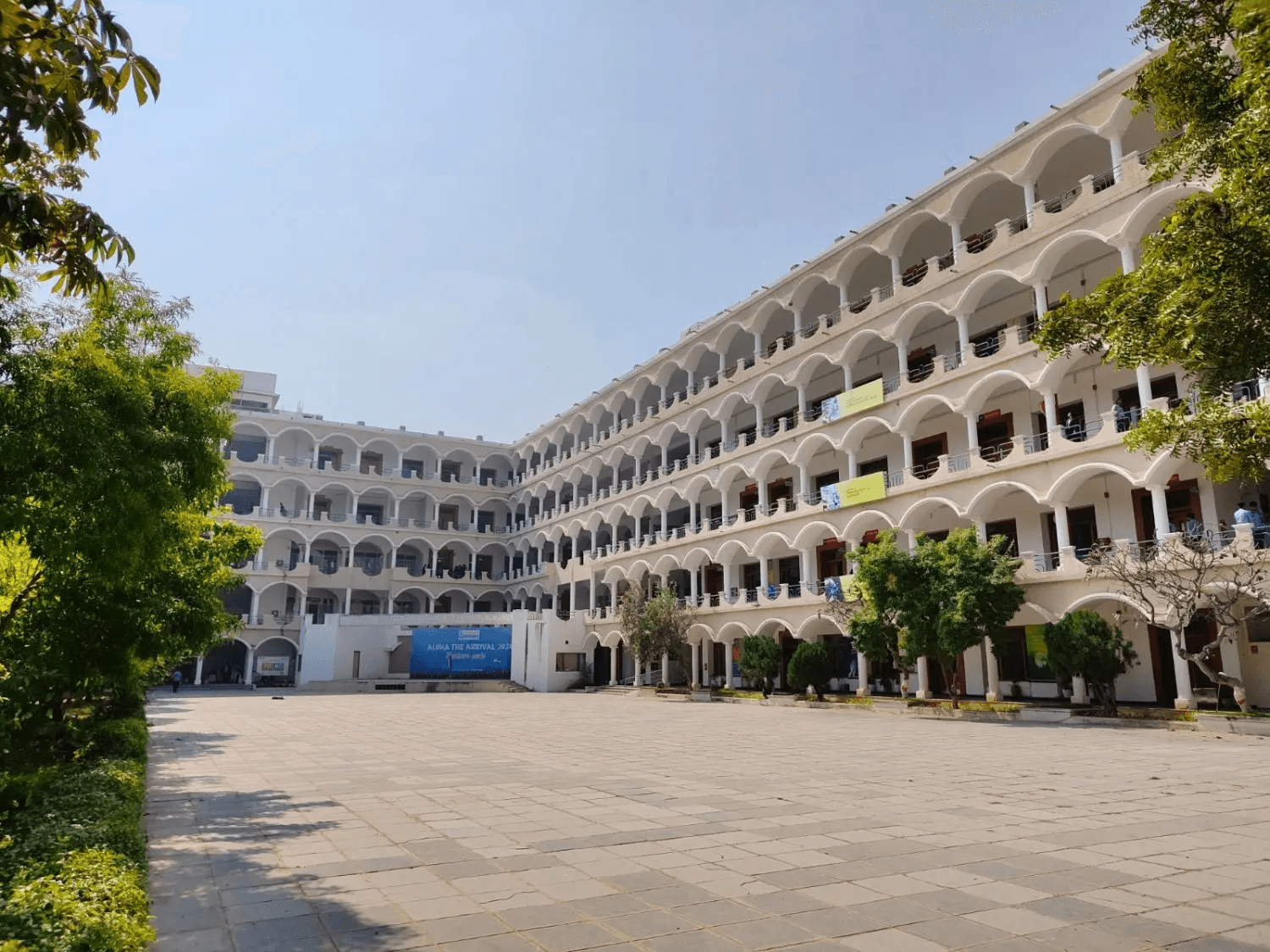
The campus is situated near Vijayawada in the Guntur district, providing access to industrial zones, business centers and transportation networks, spread across a large green campus along the banks of the Krishna River. The university provides modern academic blocks, advanced laboratories, research centers, digital libraries, hostels and student activity spaces, the institution emphasizes project based learning, research publications, patent filing, startup incubation and global academic collaborations. KL College of Engineering is accredited by NAAC with A++ grade and several programs are NBA accredited, it is approved by UGC and AICTE (where applicable) and has been consistently ranked in national frameworks including NIRF under the Engineering and University categories.
Here are the highlights of KL College of Engineering, Guntur:
The specific features of the KL College of Engineering is mentioned right below the given table :
PARTICULARS | DETAILS |
Institute Name | KL College of Engineering, Guntur |
Popularly Known As | KL University / KLEF |
Established | 1980 |
Founder | Er. Koneru Lakshmaiah |
Institute Type | Private (Deemed to be University) |
NIRF Ranking (Engineering) | 35th |
Location | Guntur, Andhra Pradesh |
Nearest City | Vijayawada |
Campus Area | Approx. 100 Acres |
Key Facilities |
|
Accreditations |
|
Governing Body | Koneru Lakshmaiah Education Foundation |
Admission Mode |
|
University Affiliation | Deemed to be University under UGC Act, 1956. |
Entrance Exams |
|
Total B.Tech Seat Intake |
|
Total M.Tech Seat Intake |
|
Counselling Authority |
|
Courses Offered |
|
Official Website |
2. Course Details and Fee Structure.
KL College of Engineering, Guntur offers Undergraduate and Postgraduate Programs across Engineering branches under its autonomous academic framework. Admissions to B.Tech programs are primarily based on KLUEEE / JEE Main / state level entrance examinations depending on eligibility, while Postgraduate Admission ( M.Tech) are conducted through entrance test GATE.
The fee structure mentioned below for both Undergraduate and Postgraduate Programs are given below:
1) B.Tech Programs
B.TECH Specializations | DURATION | ANNUAL FEES (Approx) | SEAT INTAKE (Approx) |
Computer Science & Engineering | 4 Years | INR 2.7 – 3.0 Lakh | 600+ |
Artificial Intelligence & Data Science | 4 Years | INR 2.8 – 3.0 Lakh | 180+ |
Artificial Intelligence & Machine Learning | 4 Years | INR 2.8 – 3.0 Lakh | 120+ |
Electronics & Communication Engineering | 4 Years | INR 2.5 – 2.7 Lakh | 240+ |
Electrical & Electronics Engineering | 4 Years | INR 2.4 – 2.6 Lakh | 120+ |
Mechanical Engineering | 4 Years | INR 2.3 – 2.5 Lakh | 120+ |
Civil Engineering | 4 Years | INR 2.2 – 2.4 Lakh | 120+ |
Information Technology | 4 Years | INR 2.6 – 2.8 Lakh | 180+ |
Biotechnology | 4 Years | INR 2.2 – 2.4 Lakh | 60+ |
2) M.Tech Programs
M.TECH Specializations | DURATION | ANNUAL FEES (Approx) | SEAT INTAKE (Approx) |
Computer Science & Engineering | 2 Years | INR 1.2 – 1.5 Lakh | 18–24 |
Structural Engineering | 2 Years | INR 1.2 – 1.4 Lakh | 18 |
VLSI Design | 2 Years | INR 1.3 – 1.5 Lakh | 18 |
Power Systems | 2 Years | INR 1.2 – 1.4 Lakh | 18 |
Machine Design | 2 Years | INR 1.2 – 1.4 Lakh | 18 |
Biotechnology | 2 Years | INR 1.2 – 1.4 Lakh | 18 |
3. Eligibility, Admission Process, and Documents Required
1) B.Tech
Eligibility Criteria-
The candidate must have completed 10+2 (or equivalent examination) from a recognized board.
Physics and Mathematics are compulsory subjects in the qualifying examination.
Along with Physics and Mathematics, the candidate must have studied at least one of the following subjects:
Chemistry
Biotechnology
Biology
Computer Science
The minimum aggregate marks required in the qualifying examination are 60% or above in the group subjects such as : Physics, Chemistry and Mathematics (PCM) or Physics, Chemistry and Biology (PCB).
Admission to the B.Tech program is based on valid scores in:
KLEEE (KL Engineering Entrance Examination) conducted by the university.
JEE Main / JEE Advanced.
State level Engineering Entrance Examinations across India such as EAMCET.
2) M.Tech
Eligibility Criteria-
Candidates must have completed B.E. / B.Tech degree in a relevant engineering discipline from a recognized university.
A minimum aggregate of 60% marks in the qualifying degree is generally required for admission.
Admission to M.Tech programs is based on:
GATE score, or
University level entrance examination / merit based selection depending on the program.
B.Tech
Admission Process-
Candidates must first fill out the online application form available on the official KL College of Engineering admission portal.
The application form requires candidates to register with personal details, academic details and course preferences.
After registration, candidates must pay the application fee online through debit card, credit card or net banking.
Eligible candidates must appear for KLEEE or submit valid scores from accepted national or state level entrance examinations.
Based on entrance exam performance and eligibility, candidates are shortlisted for seat allotment and admission confirmation.
Final admission is confirmed only after document verification and payment of the required admission fee at the university.
M.Tech
Admission Process-
Candidates must apply through the official KL University admission portal and fill the online application form.
Applicants must provide their academic qualifications and entrance exam details during the application process.
Eligible candidates are shortlisted based on entrance examination scores and academic merit.
Selected candidates must complete admission formalities and pay the admission fee.
Admission is confirmed only after document verification at the university.
B.Tech
Documents Required-
Class 10 Marksheet (as proof of date of birth).
Class 12 Marksheet or equivalent qualifying examination certificate.
Entrance Examination Scorecard (KLEEE / JEE Main / other accepted exam).
Transfer Certificate (TC) from a previous institution.
Migration Certificate (if applicable).
Category Certificate (SC / ST / OBC /EWS), if applicable.
Passport size photographs.
Valid photo identity proof (Aadhaar card / Passport / Voter ID / Driving License/PAN Card).
M. Tech
Documents Required-
Bachelor’s Degree Marksheets (all semesters).
Degree Certificate or Provisional Certificate.
GATE Scorecard or relevant entrance exam Scorecard (if applicable).
Transfer Certificate (TC) from a previous institution.
Migration Certificate (if applicable).
Category certificate (if applicable).
Passport size photographs
valid identity proof (Aadhaar card / Passport / Voter ID / Driving License/PAN Card).
5. Strengths and Challenges.
Strengths-
KL College of Engineering operates as a Category-I Deemed University recognized by UGC, which allows it to design its own curriculum, introduce interdisciplinary programs and update academic structures based on industry requirements.
KL university has NAAC A++ accreditation and several NBA-accredited programs, indicating institutional quality standards in academic delivery and program outcomes.
The campus includes : research centres, innovation hubs and incubation facilities that encourage students to participate in research, patents, startup activities and technology development.
The institution maintains industry collaborations and academic partnerships with companies and organizations that support internships, technical training and industry exposure for students.
The university has a dedicated Training and Placement department that conducts aptitude training, coding practice sessions, technical workshops and mock interview programs to prepare students for recruitment.
Many national and multinational companies participate in the campus recruitment drives every year, particularly in IT services, product companies, analytics firms and consulting organizations.
KL University also promotes international collaborations and global academic partnerships, enabling research collaboration, exchange programs and joint academic initiatives.
The campus infrastructure includes : modern laboratories, digital learning systems, smart classrooms and centralized library resources, which support both academic learning and research activities.
Challenges-
Due to the large student intake across multiple engineering and professional programs, competition among students for top tier placement opportunities may be higher.
Placement opportunities depend heavily on individual skill development, internships and project experience, since companies conduct multi stage recruitment processes.
As the university continues to expand its programs and departments, continuous infrastructure development and academic resource management are required to maintain quality standards.
Rapid technological changes in fields such as : Artificial Intelligence, Data Science and emerging engineering domains require frequent curriculum updates and faculty training initiatives.
Students are generally expected to participate actively in technical clubs, innovation programs, internships and skill development activities to maximize academic and career outcomes.
6. Conclusion.
KL College of Engineering, Guntur has developed over the years as a multidisciplinary private university offering structured academic programs across engineering. Established in 1980 and later granted deemed to be university status. The institution operates with academic autonomy which allows it to design curriculum frameworks aligned with current technological and industry developments. The university provides Undergraduate and Postgraduate Programs supported by modern academic infrastructure including : laboratories, research centres, digital libraries, hostels and student support service. Its campus environment encourages practical learning through project work, internships, innovation programs and research initiatives that complement classroom teaching.
Through its Training and Placement department, the university coordinates recruitment drives, industry interaction programs and skill development activities to prepare students for professional careers. Collaborations with industry partners and academic institutions also contribute to research exposure and internship opportunities. While factors such as : increasing competition among students and the need for continuous curriculum updates remain part of the evolving academic landscape. The institution continues to focus on maintaining infrastructure, research initiatives and professional training.