1. Introduction:
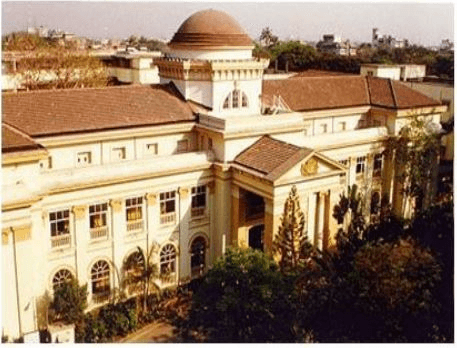
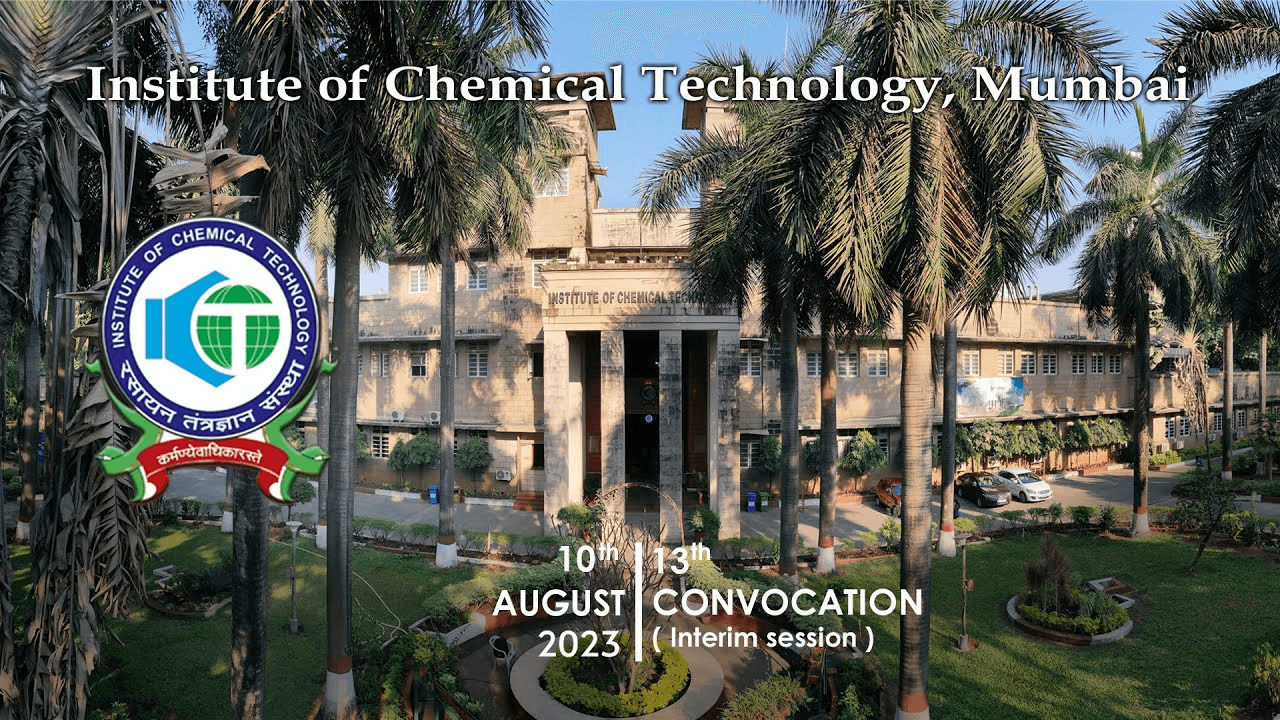
The Institute of Chemical Technology (ICT), Mumbai, is one of India’s most specialised and respected institutions in the field of chemical engineering, chemical technology, and allied sciences, established in 1933 as the University Department of Chemical Technology (UDCT) under the University of Mumbai, the institute later evolved into a deemed university and today holds the status of an Institute of National Importance. Located in Matunga, Mumbai, ICT has built a strong identity over decades by focusing deeply on core chemical sciences rather than trying to become a general engineering college. Because of this focused academic structure, it is often considered among the top destinations in India for students interested in chemical engineering, polymers, pharmaceuticals, food technology, and oils & surfactants. What makes ICT different is its strong balance between theoretical knowledge and industrial relevance.
The curriculum is designed around real manufacturing processes, industrial chemistry applications, and laboratory research, so students are not just studying concepts but understanding how industries actually operate. The institute has historically maintained close connections with chemical, petrochemical, pharmaceutical, and FMCG sectors, which is reflected in internships, live projects, and research collaborations. Over time, ICT has produced a large number of technologists, researchers, entrepreneurs, and industry leaders, especially in India’s chemical and pharmaceutical industries. Many well-known professionals in Indian manufacturing and chemical businesses are alumni of this institute, which further strengthens its reputation.
The academic environment at ICT is known to be precise yet practical. Students spend a significant amount of time in laboratories, pilot plants, and project work, which helps them develop strong technical understanding and problem solving ability. Rather than focusing only on software placements, the institute has traditionally maintained strong placement performance in core industries, research organisations, and product-based companies. For students specifically interested in chemical based engineering fields instead of conventional computer science dominated institutes, ICT Mumbai remains one of the most credible and trusted options in India.
Institute of Chemical Technology Highlights:
Here are the overview details of Institute of Chemical Technology, Mumbai:
Particulars | Details |
Institute Name | Institute of Chemical Technology, Mumbai |
Popularly Known As | ICT Mumbai |
Established | 1933 |
Founder | University of Mumbai |
Institute Type | Government Deemed University |
NIRF Ranking (Engineering) | 41st |
Location | Matunga, Mumbai, Maharashtra |
Nearest City | Mumbai |
Campus Area | 16 Acres |
Key Facilities |
|
Accreditations | NAAC Accredited (A++ Grade) |
Governing Body | Ministry of Education, Government of India |
Admission Mode | Entrance based |
University Affiliation | Deemed University |
Entrance Exams |
|
Total B.Tech Seat Intake | ~240-260 seats |
Total M.Tech Seat Intake | ~199 seats |
Counselling Authority | Maharashtra State CET Cell (CAP Counselling) |
Courses Offered |
|
Official Website | https://www.ictmumbai.edu.in |
2. Course Details and Fee Structure:
1) B.Tech / B.Chem.Engg
ICT Mumbai mainly offers specialised chemical based engineering programs instead of general branches like CSE/EEE. The duration of the course is 4 years and admission is through MHT-CET / JEE Main counselling. The fee structure is tabulated below:
B.Tech / B.Chem.Engg Specialisation | Duration | Annual Fees (Approx.) | Seat Intake (Approx.) |
Chemical Engineering | 4 Years | INR 85,000 - 99,000 | 66 |
Dyestuff Technology | 4 Years | INR 85,000 - 99,000 | 20-30 |
Food Engineering & Technology | 4 Years | INR 85,000 - 99,000 | 30 |
Pharmaceutical Chemistry & Technology | 4 Years | INR 85,000 - 99,000 | 30 |
Polymer Engineering & Technology | 4 Years | INR 85,000 - 99,000 | 30 |
Fibres & Textile Processing Technology | 4 Years | INR 85,000 - 99,000 | 30 |
Surface Coating Technology | 4 Years | INR 85,000 - 99,000 | 30 |
Oils, Oleochemicals & Surfactants Technology | 4 Years | INR 85,000 - 99,000 | 30 |
2) M.Tech / M.Chem.Engg :
The duration of the course is 2 years and admission is based on GATE score counselling. The fee structure is tabulated below:
M.Tech Specialisation | Duration | Total Fees (Approx.) | Seat Intake (Approx.) |
Chemical Engineering | 2 Years | INR 1.45 Lakhs | 30 |
Food Engineering & Technology | 2 Years | INR 1.9 - 2 Lakhs | 18 |
Polymer Engineering & Technology | 2 Years | INR 1.5 - 2 Lakhs | 18 |
Dyestuff Technology | 2 Years | INR 1.5 - 2 Lakhs | 18 |
Surface Coating Technology | 2 Years | INR 1.5 - 2 Lakhs | 18 |
Oils, Oleochemicals & Surfactants | 2 Years | INR 1.5 - 2 Lakhs | 18 |
Bioprocess Technology / Biotechnology Fields | 2 Years | INR 1.5 - 2 Lakhs | 18 |
3. Eligibility, Admission Process, and Documents Required:
Eligibility Criteria- B.Tech / B.Chem.Engg
Candidates must have passed Class 12 (10+2) or equivalent from a recognised board.
Physics and Mathematics are compulsory subjects along with Chemistry / Biotechnology.
Must secure minimum qualifying marks as prescribed by admission authorities.
Admission is based on MHT-CET (Primary) or JEE Main (All India quota) score.
M.Tech / M.Chem.Engg
Bachelor’s degree (B.E./B.Tech/B.Chem.Engg) in relevant branches.
Minimum marks as prescribed by admission authority.
Valid GATE score required.
Admission Process- B.Tech / B.Chem.Engg
Appear for MHT-CET or JEE Main examination.
Register on Maharashtra State CET Cell counselling portal (CAP rounds).
Fill college and branch preferences (ICT Mumbai campus).
Seat allotment based on merit rank, category, and availability.
Pay seat acceptance fee and confirm allotted seat.
Report to institute for document verification .
Final admission confirmed after verification and fee payment .
M.Tech / M.Chem.Engg
Appear for GATE examination.
Register for Maharashtra CAP counselling (PG admission).
Fill institute and specialisation preferences.
Seat allotment based on GATE score and merit.
Document verification and admission fee payment at institute
Documents Required-
B.Tech / B.Chem.Engg
Candidates allotted a seat must report with original documents and photocopies:
Class 10 mark sheet and certificate (Date of Birth proof).
Class 12 mark sheet and certificate.
MHT-CET / JEE Main scorecard.
CAP seat allotment letter.
School Leaving / Transfer Certificate.
Migration certificate (if applicable).
Category certificate (SC/ST/OBC/EWS), if applicable.
Domicile certificate (for Maharashtra candidates).
Income certificate (for fee concession, if applicable).
Aadhaar card or valid photo ID.
Passport size photographs.
M.Tech / M.Chem.Engg
Graduation mark sheets and degree certificates.
GATE scorecard.
CAP allotment letter.
Transfer / Migration certificate.
Category certificate (if applicable).
Photo ID proof.
Passport size photograph.
5. Strengths and Challenges:
Strengths-
ICT Mumbai specialises in chemical and allied engineering fields, giving it a clear academic identity instead of being a general engineering college.
Strong industry connections with chemical, pharmaceutical, petrochemical, and FMCG (Fast moving consumer goods) sectors help in internships and placements.
The institute has a long academic legacy, which builds trust among recruiters and research organisations.
The curriculum focuses heavily on laboratory work, pilot plants, and real industrial processes, improving practical understanding.
Alumni network is active in industries, research labs, and corporate leadership roles.
Core placements remain stable, especially in manufacturing and product-based companies.
Students gain exposure to research projects, technical competitions, and industrial training during the course.
Challenges-
Since the institute focuses on specialised branches, students interested only in software careers may find fewer direct IT opportunities compared to typical CSE colleges.
Hostel seats are limited due to campus size and city location.
Academic curriculum can feel demanding because of strong practical and technical requirements.
Some infrastructure areas develop gradually as the institute is an older campus.
Living expenses in Mumbai can be higher compared to colleges located in smaller cities.
6. Conclusion:
The Institute of Chemical Technology (ICT), Mumbai, holds a unique position among engineering institutes in India due to its specialised focus on chemical engineering and allied technology fields. The institute offers undergraduate and postgraduate programs designed around industrial processes, laboratory work, and research-based learning rather than only classroom theory. Its long academic history, experienced faculty, and strong connections with manufacturing and pharmaceutical industries contribute to a stable academic environment and reliable placement opportunities in core sectors.
Although the campus is relatively compact and hostel availability is limited, the academic structure remains disciplined and industry oriented. Students benefit from practical exposure through pilot plants, projects, and internships that help them understand real-world applications of engineering concepts. For students specifically interested in chemical and process-based engineering careers, ICT Mumbai continues to be a trusted and credible option with consistent academic standards and professional growth opportunities.