1. Introduction.
The Defence Institute of Advanced Technology (DIAT Pune) is a specialized defence technology university operating under the Ministry of Defence, Government of India and works in academic association with the Defence Research and Development Organisation (DRDO). Originally established in 1952 as the Institute of Armament Technology (IAT) to train defence personnel in advanced weapon and engineering systems. The institute was later granted the status of a Deemed University in 2006, expanding its academic role into postgraduate education and research in strategic technologies.
DIAT Pune functions as a research focused technical campus offering B.tech, M.Tech, M.Sc, PG Diploma and Ph.D programs in engineering and applied sciences aligned with defence applications. Major academic domains include : Aerospace Engineering, Mechanical Engineering, Electronics and Communication Engineering, Computer Science Engineering, Artificial Intelligence, Cyber Security, Naval Systems, Sensors Technology, Materials Engineering and Guided Weapon Systems. The curriculum structure emphasizes laboratory experimentation, simulation based learning and project oriented research rather than conventional classroom only teaching, enabling students to work on real defence related technological problems.
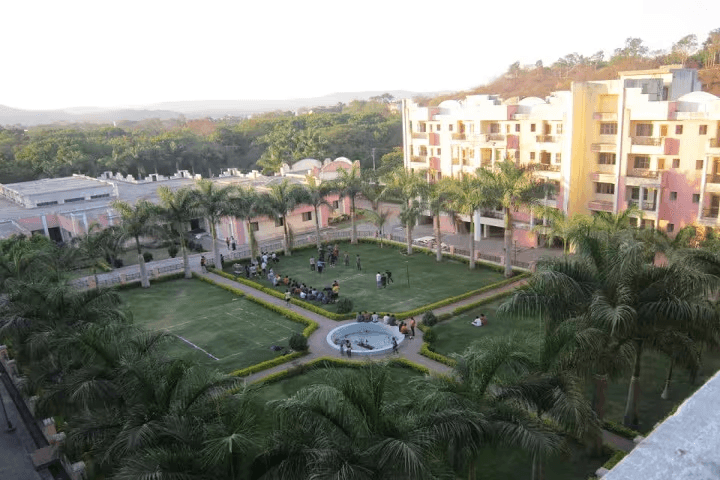
The campus is located in Girinagar, Pune and includes : academic blocks, high end research laboratories, testing facilities, computing centres, hostels and technical research centres developed for defence experimentation. Due to its direct linkage with DRDO laboratories and armed forces establishments, students often participate in sponsored research projects and technology development programs supervised by scientists and defence experts. Unlike other engineering colleges, DIAT primarily caters to sponsored officers from Army, Navy, Air Force and defence organizations along with selected civilian candidates. Creating a focused academic environment oriented toward national security technology development, through its research activities, publications and technology prototypes, the institute contributes to indigenous defence capability development, making DIAT Pune a niche higher education institution dedicated to advanced military engineering and strategic scientific research in India.
Here are the highlights of Defence Institute of Advanced Technology (DIAT Pune) :
In below provided table the major aspects of the DIAT Pune has been mentioned, have a glance on it :
PARTICULARS | DETAILS |
Institute Name | Defence Institute of Advanced Technology (DIAT), Pune |
Popularly Known As | DIAT |
Established | 1952 |
Founder | Ministry of Defence (Originated as Institute of Armament Technology) |
Institute Type | Government; Deemed-to-be University (Autonomous) |
NIRF Ranking (Engineering) | Within Top 100 (Recent NIRF Engineering Band) |
Location | Girinagar, Pune, Maharashtra |
Nearest City | Pune |
Campus Area | Approx 498 Acres |
Key Facilities |
|
Accreditations |
|
Governing Body | Ministry of Defence, Government of India. |
Admission Mode |
|
University Affiliation | Deemed-to-be University (Under Ministry of Defence) |
Entrance Exams | GATE (M.Tech) |
Total B.Tech Seat Intake | Not Applicable (No B.Tech Programme) |
Total M.Tech Seat Intake | Approx 15–20 Seats per Specialization (Limited Intake) |
Counselling Authority | Institute-Level Selection / CCMT (For GATE Candidates) |
Courses Offered |
|
Official Website | https://www.diat.ac.in |
2. Course Details and Fee Structure.
The Defence Institute of Advanced Technology, Pune offers M.Tech as its primary academic programme, the institute is a defence focused Deemed University under the Ministry of Defence, Government of India, and the M.Tech curriculum is structured around advanced military and strategic technologies, admission for civilian candidates is generally based on valid GATE scores, while sponsored candidates from Armed Forces and government organizations are nominated through their respective departments. The programme structure includes : coursework, laboratory sessions, simulation studies and a dissertation/project component in the final semester.
M.Tech Specializations | DURATION | ANNUAL FEES (Approx) | SEAT INTAKE (Approx) |
Aerospace Engineering | 2 Years | INR 70,000 –90,000 | 15 – 20 |
Guided Weapon Systems | 2 Years | INR 70,000 – 90,000 | 15 – 20 |
Mechanical / Thermal Engineering | 2 Years | INR 70,000 – 90,000 | 15 – 20 |
Marine Engineering | 2 Years | INR 70,000 – 90,000 | 15 – 20 |
Electronics & Communication Engineering | 2 Years | INR 70,000 – 90,000 | 15 – 20 |
Radar & Communication Systems | 2 Years | INR 70,000 – 90,000 | 15 – 20 |
Computer Science Engineering | 2 Years | INR 70,000 – 90,000 | 15 – 20 |
Artificial Intelligence & Cyber Security | 2 Years | INR 70,000 – 90,000 | 15 – 20 |
Materials Engineering | 2 Years | INR 70,000 – 90,000 | 15 – 20 |
Technology Management | 2 Years | INR 70,000 – 90,000 | 15 – 20 |
3. Eligibility, Admission Process, and Documents Required.
1) M.Tech
Eligibility Criteria .
The candidate must have completed B.E. / B.Tech degree in a relevant engineering discipline from a recognized university.
Minimum marks required: 55% aggregate (50% for reserved categories).
A valid GATE score is required for scholarship category admission.
Sponsored candidates (Armed Forces / Government organizations) must be officially nominated by their department/organization.
Admission Process.
Candidates must first check eligibility and apply through the institute’s official admission portal.
Appear in GATE examination (for regular civilian category).
Apply to the institute and upload application form, fee receipt and academic documents.
Shortlisted candidates must participate in the CCMT counselling / institute selection process.
Sponsored or non-GATE candidates may undergo a written test and/or interview.
Seat allotment is based on entrance score, merit and category.
Selected candidates should complete document verification and pay admission fee to confirm the seat.
Documents Required.
Valid Photo Identity Proof (Aadhar Card/ PAN Card/ Driving License/ Passport).
Address Proof.
B.E / B.Tech Marksheets and Degree Certificates.
GATE Scorecard (if applicable).
Transfer Certificate (TC).
Migration Certificate (if applicable).
Category Certificate (SC/ST/OBC/EWS) if applicable.
Admit Card and Entrance Exam Documents.
Sponsorship / Nomination Letter (for sponsored candidates).
5. Strengths and Challenges.
Strengths.
The Defence Institute of Advanced Technology Pune functions under the Ministry of Defence and works in close academic association with DRDO laboratories which provides a unique academic ecosystem focused on strategic and defence technologies rather than general engineering education.
The institute specializes in postgraduate and research oriented education, allowing students to work on real technological problems related to aerospace systems, sensors, materials, cyber security and weapon technologies through guided research projects.
Availability of high end laboratories, simulation facilities and testing equipment supports experimentation, modelling and prototype development as part of the academic curriculum.
Faculty members include experienced professors and defence scientists who supervise dissertations and research publications, helping students gain exposure to applied research methodology.
A relatively small intake ensures better faculty interaction, continuous evaluation and academic mentoring compared to large engineering colleges.
Sponsored candidates from Army, Navy, Air Force and defence organizations study together with civilian students creating a collaborative environment where academic learning is connected to practical field requirements.
Research funding and project support from government agencies enable students to participate in ongoing national technology development programs.
The campus environment remains structured and academically disciplined, supporting focused postgraduate study and long term research work.
Challenges.
Since the institute primarily offers postgraduate programmes students seeking conventional undergraduate campus exposure or diverse branch options may find limited academic variety.
The curriculum is highly specialized and research oriented, which may not suit candidates expecting traditional placement driven engineering education.
Placement opportunities are not comparable to mass recruiting private engineering colleges because many graduates move toward research, defence organizations or higher studies rather than corporate recruitment.
The academic workload involves extensive laboratory work, technical documentation and dissertation research, which requires sustained effort and technical understanding.
Limited intake and specialized eligibility criteria make admission competitive for civilian candidates.
The defence oriented environment follows institutional discipline and structured campus regulations, which may feel restrictive to students accustomed to open university culture.
Some research areas depend on project approvals and technical requirements, so academic schedules can vary based on research progress rather than fixed classroom timelines.
6. Conclusion.
The Defence Institute of Advanced Technology Pune has developed over the decades. As a specialized postgraduate institution focused on defence technology applied engineering sciences and research based education. Functioning under the Ministry of Defence, the institute operates within a structured academic framework that emphasizes laboratory learning simulation, based experimentation and dissertation oriented study rather than conventional undergraduate teaching models, the institute offers organized M.Tech programmes supported by departmental laboratories, research centres, central library resources, hostel accommodation and student support facilities inside a residential campus environment. Its academic structure combines classroom instruction with practical experimentation, project based learning and research supervision allowing students to engage with real technological challenges relevant to aerospace systems, electronics, materials engineering, cyber security and other strategic domains
The location in Pune provides proximity to defence laboratories, research establishments and government organizations which strengthens both academic collaboration and exposure. Sponsored candidates from armed forces and defence organizations study alongside civilian students creating an academic environment aligned with applied technological requirements. Research activities, funded projects and guided dissertations contribute to knowledge development in specialized technical areas while the institute does not function as a large placement driven engineering college, its focus remains on technical depth, research training and contribution to strategic sectors.